Hybrid Stepper Motors: Precision Motion Control Solutions for Industrial Automation

All Categories

hybrid stepper motor

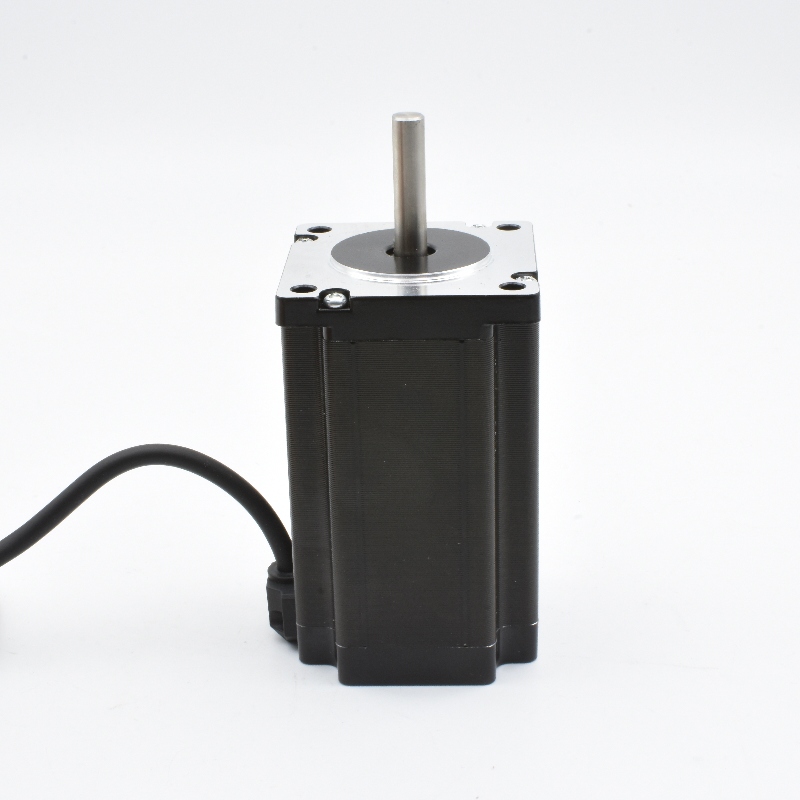
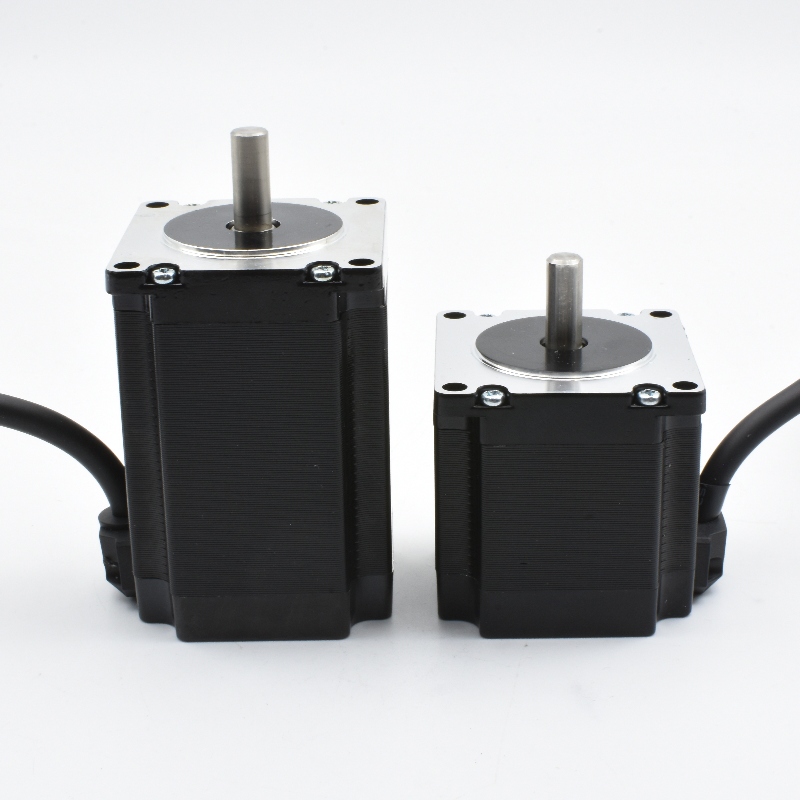
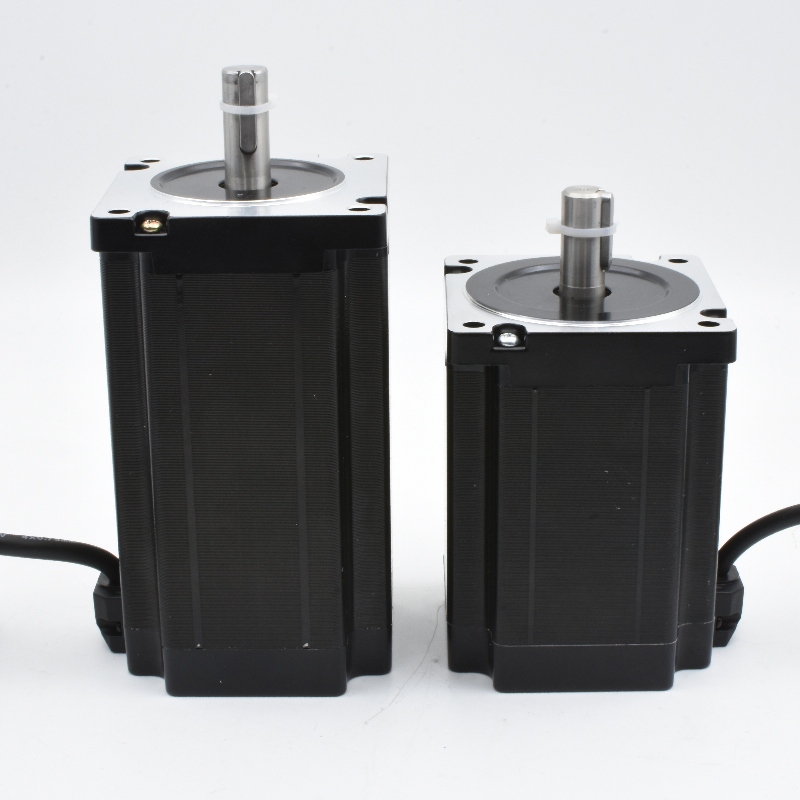
The hybrid stepper motor represents a sophisticated fusion of permanent magnet and variable reluctance technologies, creating an advanced motion control solution that delivers exceptional performance across diverse industrial applications. This innovative motor design combines the best characteristics of both motor types, utilizing permanent magnets in the rotor along with a precisely engineered tooth structure that enables smooth, accurate positioning control. The hybrid stepper motor operates by energizing specific coil windings in a predetermined sequence, causing the rotor to advance in discrete angular steps with remarkable precision. Each step typically ranges from 0.9 to 1.8 degrees, allowing for highly accurate positioning without requiring feedback sensors in most applications. The motor's construction features a multi-stack rotor design with permanent magnets positioned between steel rotor sections, creating strong magnetic fields that interact with the stator windings to produce consistent torque output. This unique configuration enables the hybrid stepper motor to maintain its position when power is removed, providing excellent holding torque characteristics. The stator contains multiple phases, typically two or five, with each phase containing precisely wound copper coils that generate controlled magnetic fields. Advanced manufacturing techniques ensure tight tolerances and consistent performance, making these motors ideal for applications requiring repeatable positioning accuracy. The hybrid stepper motor's ability to operate in open-loop systems significantly reduces system complexity while maintaining excellent control characteristics. Modern hybrid stepper motors incorporate advanced materials and manufacturing processes that enhance thermal management, reduce vibration, and improve overall efficiency. The motor's digital nature makes it perfectly suited for computer-controlled systems, allowing for seamless integration with programmable logic controllers, motion controllers, and other automation equipment. These motors excel in applications where precise positioning, repeatability, and reliable operation are critical requirements.

New Product Recommendations

Hybrid stepper motors offer numerous compelling advantages that make them the preferred choice for precision motion control applications across various industries. These motors deliver exceptional positioning accuracy without requiring expensive feedback systems, enabling cost-effective automation solutions that maintain high performance standards. The inherent ability to operate in open-loop configurations significantly reduces system complexity and eliminates the need for encoders or resolvers in many applications, resulting in lower overall system costs and simplified installation procedures. The hybrid stepper motor provides excellent holding torque when stationary, ensuring that loads remain securely positioned even when power is removed or interrupted, which proves invaluable in applications where maintaining position during power outages is critical. These motors demonstrate remarkable repeatability, with positioning errors typically less than 3% of step angle, making them ideal for applications requiring consistent performance over extended periods. The digital nature of hybrid stepper motors enables precise speed control across a wide range of operating conditions, from extremely slow creep speeds to rapid positioning moves, providing flexibility that traditional motors cannot match. Maintenance requirements remain minimal due to the brushless design, eliminating wear-prone components and reducing downtime while extending operational life. The motors respond instantly to control signals without requiring warm-up time or complex startup procedures, enabling immediate operation when power is applied. Hybrid stepper motors offer excellent torque-to-inertia ratios, providing rapid acceleration and deceleration capabilities that enhance overall system performance and productivity. The wide variety of available frame sizes, torque ratings, and electrical characteristics ensures optimal motor selection for specific application requirements. These motors integrate seamlessly with modern digital control systems, accepting standard pulse and direction signals that simplify programming and control implementation. The robust construction of hybrid stepper motors enables reliable operation in demanding industrial environments, including applications with temperature variations, vibration, and contamination exposure. Cost-effectiveness remains a significant advantage, as hybrid stepper motors typically cost less than servo motor systems while providing comparable performance in many positioning applications.

Latest News

DC Planetary Gear Motor vs Regular Motors: Key Differences

15

Dec

DC Planetary Gear Motor vs Regular Motors: Key Differences

When selecting motors for industrial applications, engineers face a critical decision between standard DC motors and specialized gear motor configurations. The dc planetary gear motor represents a sophisticated solution that combines the advantages o...
View More
Top 10 Micro DC Motor Applications in Robotics

15

Dec

Top 10 Micro DC Motor Applications in Robotics

The robotics industry has experienced unprecedented growth in recent years, driven by advances in miniaturization and precision engineering. At the heart of many robotic systems lies a crucial component that enables precise movement and control: the ...
View More
2026 Brush DC Motor Guide: Types, Uses & Applications

04

Feb

2026 Brush DC Motor Guide: Types, Uses & Applications

The brush DC motor remains a cornerstone technology in modern industrial and commercial applications, offering reliable performance and cost-effective solutions across diverse sectors. As we advance into 2026, understanding the fundamental principles...
View More
24V DC Motor Troubleshooting: Common Issues & Solutions

04

Feb

24V DC Motor Troubleshooting: Common Issues & Solutions

When your 24v dc motor begins experiencing operational issues, identifying the root cause quickly can save valuable time and prevent costly equipment downtime. These versatile power units are essential components in countless industrial applications,...
View More

Get a Free Quote

Our representative will contact you soon.
Email
Name
Company Name
Message
0/1000

hybrid stepper motor

Precision Positioning Technology

Precision Positioning Technology

The hybrid stepper motor's precision positioning capability represents one of its most valuable features, delivering accuracy levels that meet the demanding requirements of modern automated systems. This exceptional precision stems from the motor's unique design that combines permanent magnet technology with a carefully engineered rotor tooth structure, creating a system capable of achieving positioning accuracies within 3% of the specified step angle without requiring external feedback devices. The motor accomplishes this remarkable precision through its multi-stack rotor configuration, where permanent magnets are strategically positioned between precisely machined steel sections, creating consistent magnetic fields that interact predictably with the stator windings. Each energization sequence moves the rotor exactly one step, typically 1.8 degrees for standard motors, enabling positioning resolution of 200 steps per revolution in basic configuration. When combined with microstepping drive technology, resolution can be increased dramatically, often reaching 25,600 steps per revolution or more, providing positioning accuracy that rivals expensive servo systems. This precision remains consistent across the motor's entire speed range, from ultra-slow creep speeds measured in steps per minute to rapid positioning moves exceeding 1000 steps per second. The hybrid stepper motor maintains its positioning accuracy regardless of load variations within its rated capacity, ensuring reliable performance in applications where external forces or changing loads could affect positioning. Temperature stability represents another critical aspect of the motor's precision, with properly designed systems maintaining accuracy across wide temperature ranges without requiring complex compensation algorithms. The absence of cumulative positioning errors distinguishes hybrid stepper motors from other motor technologies, as each step represents an absolute position reference that doesn't drift over time. This characteristic makes hybrid stepper motors particularly valuable in applications requiring long-term accuracy without periodic recalibration. Manufacturing tolerances maintained during production ensure consistent performance between individual motors, enabling system designers to specify precise positioning capabilities with confidence. The motor's ability to maintain position when de-energized adds another dimension to its precision capabilities, as loads remain securely positioned without power consumption or active control.
Superior Torque Characteristics

Superior Torque Characteristics

Hybrid stepper motors deliver exceptional torque characteristics that provide significant advantages across diverse motion control applications, offering both high holding torque and consistent running torque throughout their operational range. The motor's holding torque capability represents one of its most distinctive features, maintaining full rated torque when stationary without power consumption beyond what's needed to energize the windings. This characteristic results from the interaction between the permanent magnets embedded in the rotor and the energized stator coils, creating a magnetic lock that securely maintains position under load. Typical holding torques range from a few ounce-inches in small motors to several hundred pound-feet in larger industrial units, providing designers with extensive options for matching motor capabilities to application requirements. The hybrid stepper motor's running torque characteristics demonstrate remarkable consistency across its speed range, delivering approximately 80% of holding torque at moderate speeds while maintaining usable torque levels even at higher velocities. This torque profile makes hybrid stepper motors particularly well-suited for applications requiring consistent force output during positioning moves or constant-speed operations. The motor's torque production remains highly predictable and controllable, responding linearly to current input and enabling precise torque regulation through drive current adjustment. Detent torque, the torque present when windings are not energized, provides additional positioning stability and contributes to the motor's ability to maintain position during power interruptions. Advanced rotor designs optimize magnetic flux distribution to maximize torque density while minimizing cogging effects that could cause irregular motion or vibration. The hybrid stepper motor's ability to produce high starting torque enables acceleration of significant loads from rest without requiring complex starting procedures or variable frequency drives. Thermal characteristics directly impact torque performance, with properly designed motors maintaining consistent torque output across their specified temperature range. The motor's torque ripple remains minimal in well-designed systems, ensuring smooth operation even at low speeds where torque variations become most apparent. Torque-to-inertia ratios in hybrid stepper motors often exceed those of comparable servo motors, enabling rapid acceleration and deceleration that enhances overall system performance and reduces cycle times in automated equipment.
Cost-Effective Control Solutions

Cost-Effective Control Solutions

The cost-effectiveness of hybrid stepper motor control systems represents a compelling advantage that makes precision motion control accessible to a broad range of applications and budgets, delivering professional-grade performance without the expense typically associated with high-precision positioning systems. This economic advantage stems from the motor's ability to operate in open-loop configurations, eliminating the need for expensive feedback devices such as encoders, resolvers, or linear scales that servo systems require for accurate positioning. The simplified control architecture reduces both initial system costs and ongoing maintenance expenses while maintaining positioning accuracies that meet or exceed requirements in most applications. Drive electronics for hybrid stepper motors remain relatively simple and cost-effective compared to servo amplifiers, as they primarily need to switch current between motor phases in predetermined sequences rather than implementing complex feedback control algorithms. Standard microstepping drives provide smooth operation and high resolution at fraction of the cost of servo drives with equivalent performance capabilities. The digital nature of hybrid stepper motor control enables direct interfacing with programmable logic controllers, computers, and other digital control systems without requiring digital-to-analog converters or complex signal conditioning equipment. Simple pulse and direction signals provide complete control over motor speed, direction, and positioning, simplifying system integration and reducing programming complexity. Installation costs decrease significantly due to the reduced wiring requirements, as hybrid stepper motors don't need separate power and feedback cables that servo systems require. The standardized control signals and mounting configurations enable easy motor replacement and system upgrades without extensive rewiring or mechanical modifications. Training requirements for maintenance personnel remain minimal, as hybrid stepper motor systems use straightforward control principles that don't require specialized servo system knowledge or complex tuning procedures. Inventory costs stay low due to the wide availability of standard frame sizes and electrical characteristics, enabling stocking of common configurations without requiring custom or specialized variants. The reliable operation and extended service life of hybrid stepper motors reduce total cost of ownership through decreased maintenance requirements and longer replacement intervals. Energy efficiency improvements in modern hybrid stepper motor designs contribute to lower operating costs, particularly in applications with continuous or frequent operation cycles.
Hybrid Stepper Motors: Precision Motion Control Solutions for Industrial Automation

Get a Free Quote

Our representative will contact you soon.
Email
Name
Company Name
Message
0/1000
Hybrid Stepper Motors: Precision Motion Control Solutions for Industrial Automation