 EN

Robot Vacuum Cleaner Motors: Roller Brush, Side Brush and Mop-Lifting Drive Solutions
"Compact in Millimetres · Quiet at Night · Reliable Over Thousands of Cycles" — Multi-axis micro drive platform for autonomous cleaning robots
Motor types: Micro DC gear motor (N20-class) / DC planetary gear motor (TJX series) / DC worm gear motor for self-locking lift / miniature DC brushed motor for side brush
Application case
A robot vacuum cleaner is one of the most motor-dense consumer devices on the market. A single unit typically contains four to seven independent micro motors, each with a different duty:
Function |
Motor type |
Critical requirement |
Roller (main) brush |
Micro DC gear motor, planetary stage |
Constant torque under hair wrap and carpet load |
Side brush |
Miniature DC brushed / micro gear motor |
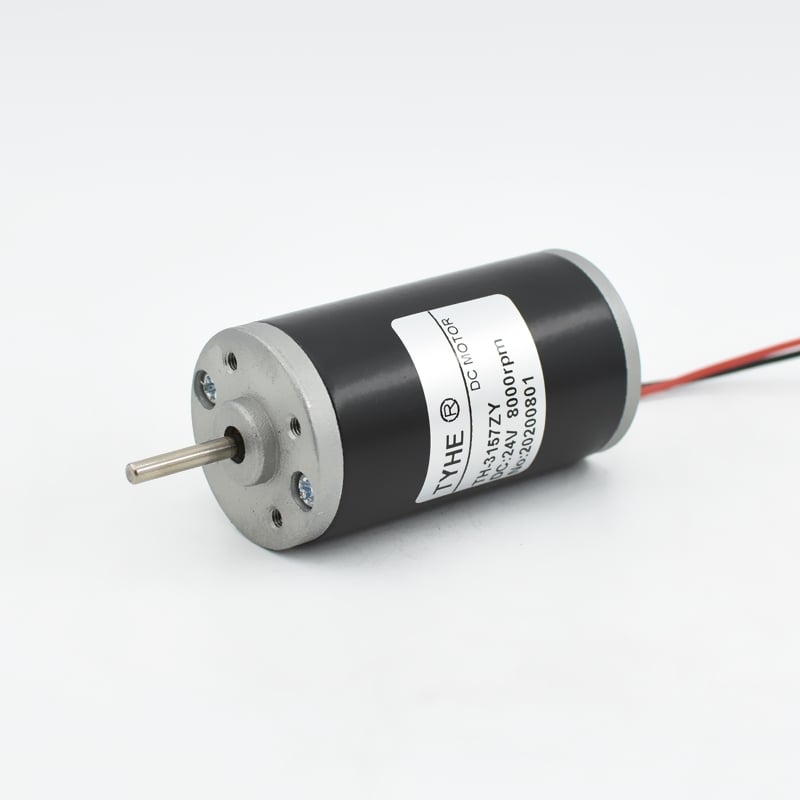
High rpm at low torque, low current draw |
Wheel drive |
High-torque DC gear motor |
Start-up torque on thresholds and carpet edges |
Mop lifting |
Worm gear motor or planetary actuator |
Self-locking hold position, low noise, precise stroke |
Mop rotation / dustbin |
Planetary gear motor |
Compact envelope, sealed against dust |
LiDAR rotation |
Micro DC motor |
Speed stability, low vibration |
The robotic vacuum cleaner market was valued at USD 12.5 billion in 2025 and is projected to reach USD 30.9 billion by 2035 (Global Market Insights); a second estimate puts 2025 at USD 7.12 billion, rising to USD 8.16 billion in 2026 (Fortune Business Insights). Either way, drive-system reliability now sits on the critical path for brand reputation.
Industry pain points
1. Noise in night mode. Cleaning robots increasingly run while occupants sleep. Gear mesh and brush commutation noise from a cheap drivetrain is the most common complaint in product reviews, and it is a design-stage problem, not a firmware problem.
2. Hair wrap and stall events. Roller brushes jam. The motor must survive repeated stall and reverse cycles without demagnetizing, overheating or stripping gear teeth.
3. Battery life pressure. Every milliamp of no-load current shortens run time. Efficiency at the working point — not peak efficiency — determines runtime.
4. Mop-lift positioning. A lift mechanism that drifts or back-drives under load leaves wet mop pads pressed against carpet. Self-locking worm stages solve this at the cost of efficiency.
5. Dust ingress. Fine dust destroys sleeve bearings and grease. Ingress protection defined by IEC 60529 must be specified per motor location, not per device.
6. Life expectancy. Robots are expected to run 300–500 hours per year for several years. Brush wear and grease degradation, not electrical failure, usually end the life.
TYHE solution
TYHE Motor supplies the full drivetrain from a single source: micro DC gear motors, planetary gear motors, worm gear motors and stepper motors — around 200 motor types and 2,000+ SKUs, with diameters from roughly 16 mm to 106 mm.
For a cleaning robot program, that means:
Platform-based selection.
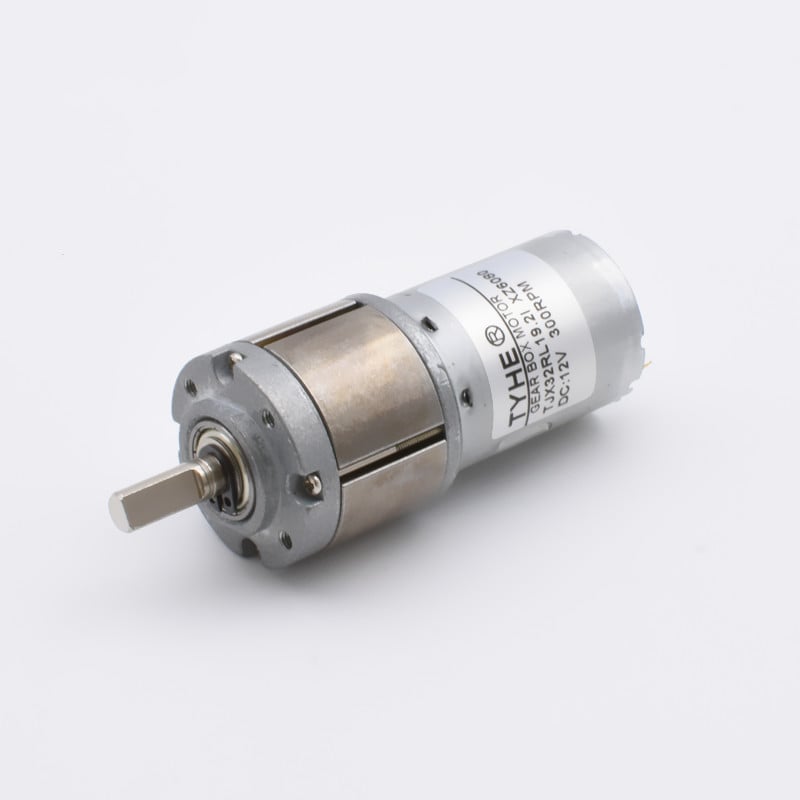
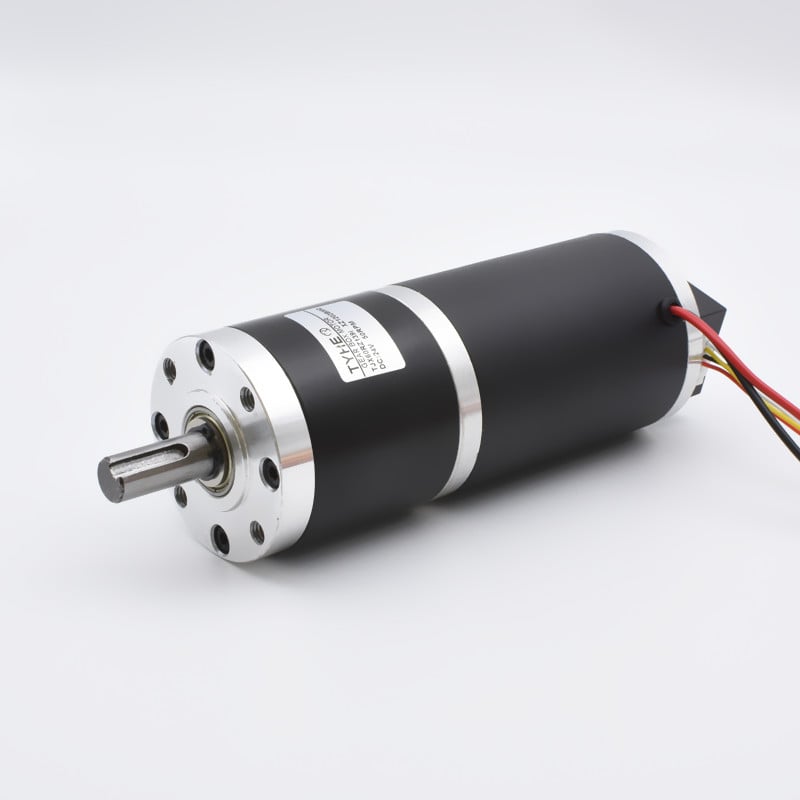
- Side brush and roller brush duties map onto existing N20-class and TJX-series planetary platforms, so development starts from proven tooling rather than a new design. Under light customization, sampling runs on TYHE's dedicated sample line.
Noise engineered, not filtered.
- Gear stage selection (worm vs. planetary), grease specification, bearing type and mounting interface are agreed at drawing stage, with noise targets stated in dB(A) at a defined distance — measurement discipline matters, which is why methods such as
ISO 10302
exist for small machines.
Self-locking mop lift.
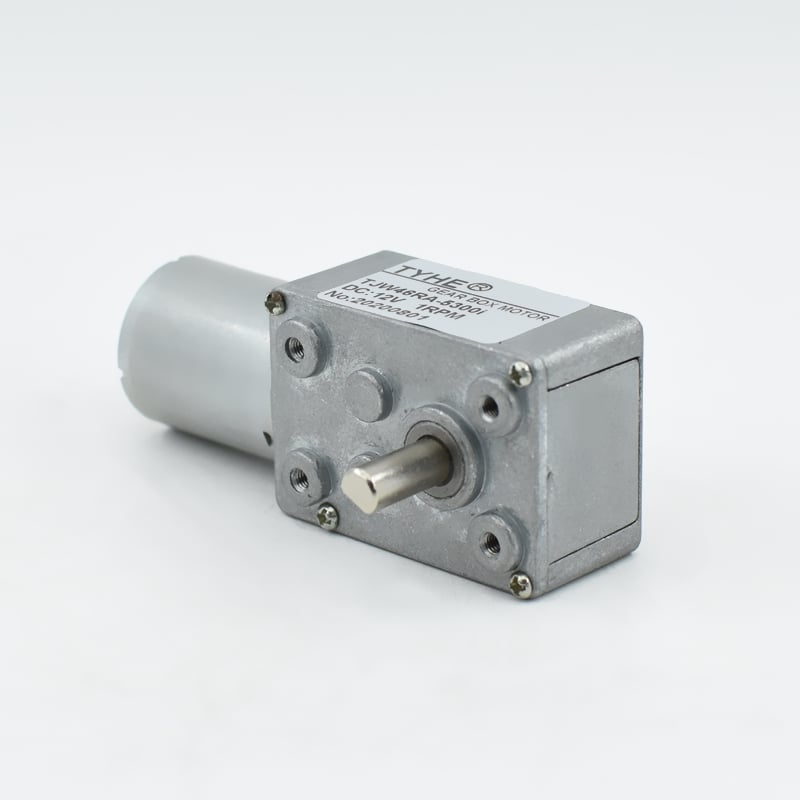
- A worm gear stage holds the mop pad raised without holding current, cutting standby consumption.
Compliance ready.
- CE and RoHS certified products under an
ISO 9001
-based quality system, exported to 35+ countries.
Fast programs.
- Design-to-mass-production in under 40 days, four assembly lines and 100+ production staff for volume ramp; new-product R&D cost is refunded after mass production.
Selection data to prepare before the RFQ
1. Roller brush: required torque at working rpm, maximum jam torque, reverse-cycle frequency
2. Side brush: target rpm, available current, expected hair-wrap load
3. Mop lift: stroke, load, hold requirement, noise target, cycle life
4. Wheel drive: start-up torque on threshold height, continuous torque on carpet
5. Environment: dust exposure, cleaning-agent contact, ambient temperature range
6. Electrical: battery voltage (single-cell 3.7 V, 7.4 V or 12 V packs are common), driver PWM frequency
7. Life: target operating hours and warranty period
FAQ
How many motors does a robot vacuum typically use?Four to seven for mid-range models: roller brush, one or two side brushes, two wheel drives, plus optional mop-lift, mop-rotation and LiDAR motors.
Brushed or brushless for the roller brush?Brushless wins on life and efficiency for continuous-duty premium models; a well-specified brushed gear motor remains cost-effective for mid-range units with shorter daily run times.
What noise level do robot vacuums target?Night-mode products are usually specified well below 45 dB(A) at the user position. Always state distance, background level and operating point so figures are comparable.
Why use a worm gear for mop lifting?Worm stages are self-locking: the mop stays raised with zero holding current, and the mechanism cannot be back-driven by the pad's weight.
Can one supplier provide all the motors in a robot?Yes, and it simplifies noise, connector and quality alignment. TYHE covers DC gear, planetary, worm and stepper motors from one factory.
What is the typical development timeline for a custom drivetrain?Two to three weeks for samples based on an existing platform with light customization; under 40 days from design to mass production for a new variant.
Bottom line
Treat the robot vacuum as a multi-motor system, not a component purchase. Specify torque at the working point, self-locking behaviour for the lift, IP code per location, and noise with a measurement method attached — then source the whole drivetrain from a manufacturer that owns its gear platforms and sample line.
Contact TYHE Motor for drivetrain selection support: https://www.tyhemotors.com/contact-us