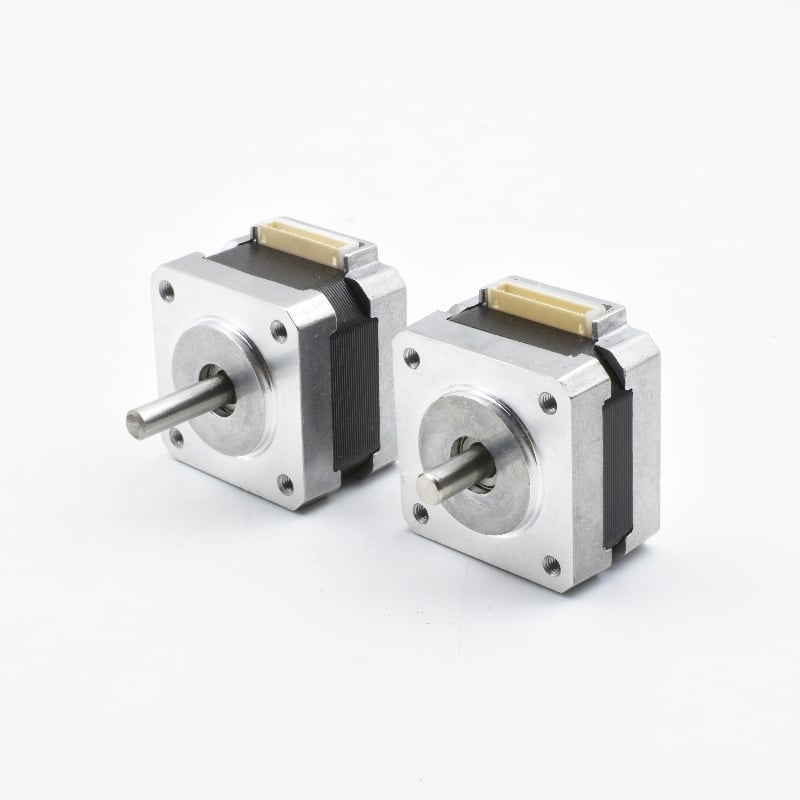
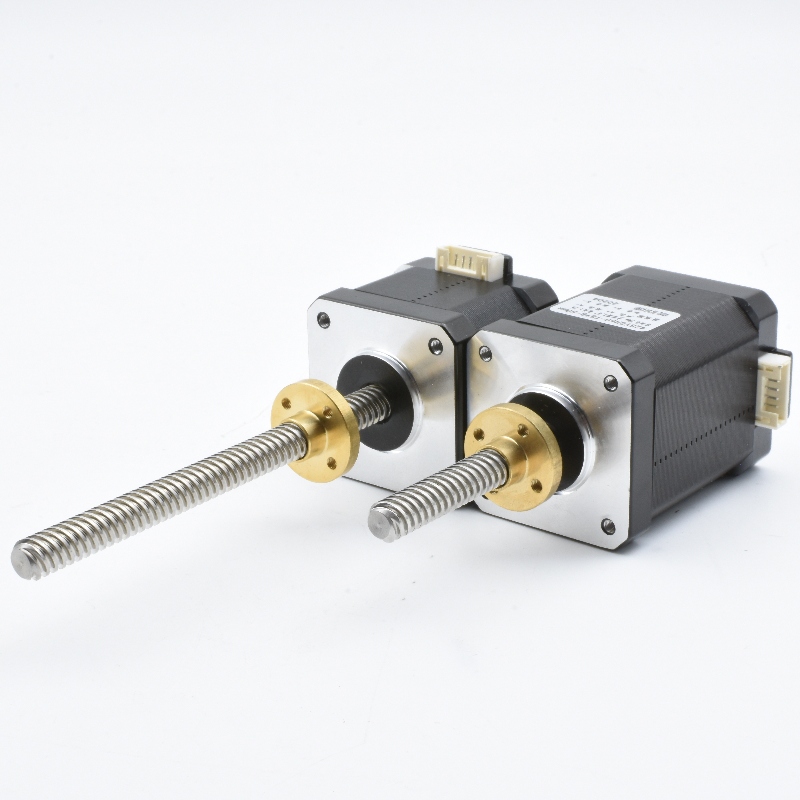
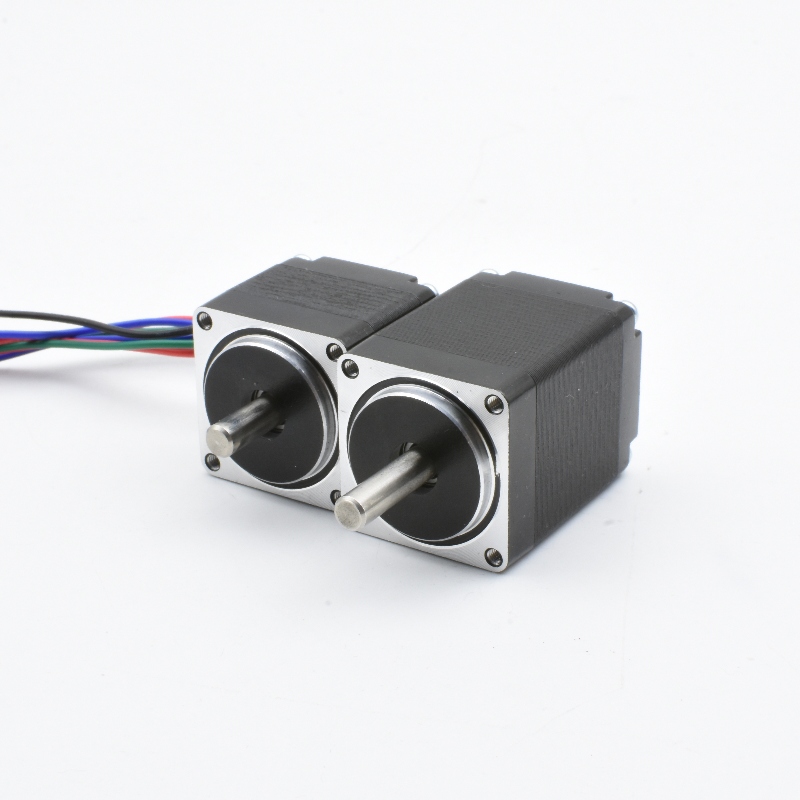
Closed Loop Stepper Motors: Advanced Precision Control with Superior Accuracy and Intelligent Feedback Systems

All Categories

closed loop stepper motor

A closed loop stepper motor represents an advanced evolution in precision motion control technology, combining the inherent positioning accuracy of traditional stepper motors with sophisticated feedback mechanisms. This innovative motor system integrates an encoder or resolver directly into the motor assembly, creating a continuous feedback loop that monitors the actual rotor position and compares it to the commanded position. The closed loop stepper motor eliminates the fundamental limitation of open loop systems where step loss can occur without detection, ensuring reliable and accurate positioning throughout operation. The main functions of a closed loop stepper motor include precise position control, speed regulation, and torque monitoring. Unlike conventional stepper motors that operate blindly on the assumption that each pulse results in a precise step movement, the closed loop stepper motor continuously verifies actual position against commanded position. This real-time feedback enables the system to detect and correct any discrepancies immediately, maintaining positioning accuracy even under varying load conditions or external disturbances. The technological features that distinguish closed loop stepper motors include high-resolution encoders, advanced control algorithms, and intelligent error correction capabilities. These motors typically incorporate optical or magnetic encoders with resolutions ranging from hundreds to thousands of pulses per revolution, providing extremely fine position feedback. The control electronics process this feedback information using sophisticated algorithms that can compensate for mechanical variations, temperature effects, and load changes. Modern closed loop stepper motor systems often feature adaptive current control, which optimizes power consumption by adjusting motor current based on actual load requirements. Applications for closed loop stepper motor technology span numerous industries where precision positioning is critical. Manufacturing automation relies heavily on these motors for CNC machining, pick-and-place operations, and assembly line positioning. Medical equipment utilizes closed loop stepper motors in surgical robots, diagnostic imaging systems, and laboratory automation. Aerospace and defense applications benefit from the reliability and precision offered by closed loop stepper motor systems in satellite positioning, radar systems, and flight control mechanisms.

New Product Releases

Closed loop stepper motors deliver exceptional positioning accuracy that surpasses traditional open loop systems by incorporating real-time feedback mechanisms. This enhanced accuracy stems from the continuous monitoring of actual motor position, allowing the system to detect and correct any deviations from the commanded position instantly. Users benefit from consistent performance regardless of load variations, temperature fluctuations, or mechanical wear that might cause step loss in conventional stepper motors. The feedback system ensures that positioning errors remain within tight tolerances, typically achieving accuracies of 0.1 degrees or better depending on the encoder resolution. Improved reliability represents another significant advantage of closed loop stepper motor technology. Traditional stepper motors can lose steps under high load conditions or when operating at excessive speeds, leading to positioning errors that accumulate over time. The closed loop stepper motor eliminates this concern by detecting step loss immediately and implementing corrective actions. This reliability translates to reduced downtime, fewer quality issues, and lower maintenance costs for industrial applications. Enhanced torque utilization makes closed loop stepper motors more efficient than their open loop counterparts. The feedback system allows for dynamic current adjustment based on actual load requirements, reducing power consumption during light load conditions while maintaining full torque capability when needed. This intelligent power management extends motor life, reduces heat generation, and lowers overall energy costs. Speed performance improvements distinguish closed loop stepper motors from traditional systems. While open loop stepper motors experience reduced torque at higher speeds and risk losing steps, closed loop systems maintain positioning accuracy across a broader speed range. The feedback mechanism enables higher operational speeds without sacrificing precision, increasing overall system productivity. Diagnostic capabilities built into closed loop stepper motor systems provide valuable operational insights. The continuous monitoring of position, current, and performance parameters allows for predictive maintenance scheduling and early detection of potential issues. This proactive approach minimizes unexpected failures and optimizes maintenance schedules. Installation flexibility offers practical benefits for system integrators and end users. Closed loop stepper motors can adapt to various mechanical configurations and load conditions automatically, reducing the need for extensive tuning and calibration. The self-correcting nature of these systems simplifies commissioning and allows for easier system modifications or upgrades.

Tips And Tricks

Maintenance Tips for Your Planetary Gear Motor

15

Dec

Maintenance Tips for Your Planetary Gear Motor

Industrial applications across manufacturing, automation, and robotics rely heavily on efficient power transmission systems. Among the most critical components in these systems is the planetary gear motor, which combines compact design with exception...
View More
2026 Brush DC Motor Guide: Types, Uses & Applications

04

Feb

2026 Brush DC Motor Guide: Types, Uses & Applications

The brush DC motor remains a cornerstone technology in modern industrial and commercial applications, offering reliable performance and cost-effective solutions across diverse sectors. As we advance into 2026, understanding the fundamental principles...
View More
DC Gear Motor vs Stepper Motor: Which to Choose?

04

Feb

DC Gear Motor vs Stepper Motor: Which to Choose?

When selecting a motor for industrial applications, engineers often face the critical decision between a dc gear motor and a stepper motor. Both motor types offer distinct advantages and serve different purposes in automation systems, robotics, and p...
View More
Top 10 Applications of 12V DC Motors in Industry

04

Mar

Top 10 Applications of 12V DC Motors in Industry

Industrial automation and manufacturing processes rely heavily on reliable motor solutions that deliver consistent performance across diverse applications. The 12v dc motor has emerged as a cornerstone technology in modern industrial operations, prov...
View More

Get a Free Quote

Our representative will contact you soon.
Email
Name
Company Name
Message
0/1000

closed loop stepper motor

Advanced Feedback Control Technology

Advanced Feedback Control Technology

The cornerstone of closed loop stepper motor performance lies in its sophisticated feedback control technology, which fundamentally transforms how precision positioning systems operate. This advanced system incorporates high-resolution encoders that continuously monitor the actual rotor position with exceptional accuracy, typically providing resolutions of 1000 to 10000 counts per revolution or higher. The feedback mechanism creates a real-time communication loop between the motor's actual position and the controller's commanded position, enabling instant detection and correction of any discrepancies. This technology eliminates the guesswork inherent in open loop stepper motor systems, where the controller assumes each pulse results in a precise step movement without verification. The closed loop stepper motor's feedback control system processes position data through advanced algorithms that can distinguish between legitimate position changes and unwanted variations caused by external factors. When the system detects a position error, it immediately implements corrective actions by adjusting the drive signals to bring the motor back to the desired position. This continuous correction process happens within microseconds, ensuring that positioning accuracy remains consistent throughout the entire range of operation. The feedback control technology also enables adaptive performance optimization, automatically adjusting motor parameters based on real-time operating conditions. For instance, the system can modify current levels, timing sequences, and control algorithms to match the specific load and speed requirements of each application. This adaptability ensures optimal performance across varying operational scenarios while maintaining the precision that critical applications demand. Furthermore, the advanced feedback control technology provides comprehensive diagnostic information that enhances system reliability and maintenance planning. The continuous monitoring of motor performance parameters allows for early detection of potential issues such as bearing wear, mechanical binding, or electrical problems. This predictive capability enables proactive maintenance scheduling, reducing unexpected downtime and extending overall system life. The integration of feedback control technology in closed loop stepper motors represents a significant advancement in motion control, offering users unprecedented levels of accuracy, reliability, and operational insight.
Superior Positioning Accuracy and Repeatability

Superior Positioning Accuracy and Repeatability

Closed loop stepper motors excel in delivering superior positioning accuracy and repeatability that meets the demanding requirements of precision applications across multiple industries. The enhanced accuracy stems from the elimination of cumulative positioning errors that plague traditional open loop stepper motor systems, where undetected step loss can compound over time and result in significant positioning deviations. With closed loop stepper motor technology, each movement is verified against the actual position, ensuring that the motor reaches and maintains the exact commanded position regardless of external influences. The positioning accuracy of closed loop stepper motors typically achieves levels of 0.05 to 0.1 degrees, with some high-precision variants reaching even finer resolutions depending on the encoder specifications and mechanical design. This level of accuracy proves essential for applications such as semiconductor manufacturing, where positioning tolerances measured in micrometers determine product quality and yield. The repeatability characteristics of these motors ensure that returning to a previously commanded position occurs with exceptional consistency, typically within 0.01% of the full-scale range. Temperature compensation represents another aspect of superior positioning accuracy in closed loop stepper motor systems. Unlike open loop motors that may experience positioning drift due to thermal expansion or temperature-dependent electrical characteristics, closed loop systems automatically compensate for these variations through continuous position feedback. This thermal stability ensures consistent performance across wide temperature ranges, making these motors suitable for applications in harsh industrial environments or precision laboratory equipment. Load variation compensation further enhances the positioning accuracy of closed loop stepper motors. Traditional stepper motors may lose steps or experience position lag when subjected to varying loads, but closed loop systems detect and compensate for these effects in real-time. Whether the motor encounters increased friction, external disturbances, or changing inertial loads, the feedback system maintains positioning accuracy by adjusting drive parameters accordingly. The superior positioning accuracy and repeatability of closed loop stepper motors translate directly into improved product quality, reduced waste, and enhanced system performance for end users. Manufacturing processes benefit from tighter tolerances and more consistent results, while automated systems achieve higher throughput and reliability. This accuracy advantage becomes particularly valuable in applications where positioning errors can result in costly rework, safety concerns, or regulatory compliance issues.
Intelligent Error Detection and Self-Correction

Intelligent Error Detection and Self-Correction

The intelligent error detection and self-correction capabilities of closed loop stepper motors represent a revolutionary advancement in motion control technology, providing unprecedented reliability and autonomous operation. This sophisticated system continuously monitors multiple performance parameters including position, velocity, current consumption, and timing to identify potential issues before they impact system performance. The closed loop stepper motor's intelligent algorithms can distinguish between normal operational variations and actual error conditions, preventing false alarms while ensuring rapid response to genuine problems. The error detection system operates on multiple levels, from basic position monitoring to advanced pattern recognition that can identify developing mechanical or electrical issues. Position errors are detected immediately through comparison of commanded versus actual position, with correction algorithms engaging within milliseconds to restore proper positioning. Additionally, the system monitors velocity profiles to detect unexpected deceleration or acceleration that might indicate mechanical binding, excessive friction, or electrical faults. Current monitoring provides insights into load conditions and motor health, allowing the system to detect overload conditions, winding problems, or driver issues before they cause system failure. Self-correction capabilities enable closed loop stepper motors to automatically adjust their operation to maintain optimal performance under varying conditions. When the system detects a position error, it implements corrective actions by modifying the drive signals, adjusting current levels, or altering timing parameters to bring the motor back to the desired position and operating state. This self-correction occurs transparently to the user, maintaining system operation without requiring external intervention or manual adjustments. The intelligent algorithms can also learn from repeated error patterns and implement preemptive corrections to prevent similar issues in the future. Advanced diagnostic features provide detailed information about error conditions and system performance trends, enabling proactive maintenance and system optimization. The closed loop stepper motor system logs error events, performance statistics, and operational parameters, creating a comprehensive database that can be analyzed to identify potential improvements or predict maintenance requirements. This diagnostic capability extends beyond simple error reporting to include performance optimization recommendations and trend analysis that helps users maximize system efficiency and reliability. The combination of intelligent error detection and self-correction in closed loop stepper motors significantly reduces system downtime, improves operational reliability, and minimizes the need for specialized technical support. Users benefit from systems that can adapt to changing conditions, self-diagnose problems, and implement corrective actions automatically, resulting in more robust and user-friendly motion control solutions.
Closed Loop Stepper Motors: Advanced Precision Control with Superior Accuracy and Intelligent Feedback Systems

Get a Free Quote

Our representative will contact you soon.
Email
Name
Company Name
Message
0/1000
Closed Loop Stepper Motors: Advanced Precision Control with Superior Accuracy and Intelligent Feedback Systems