
 EN
EN
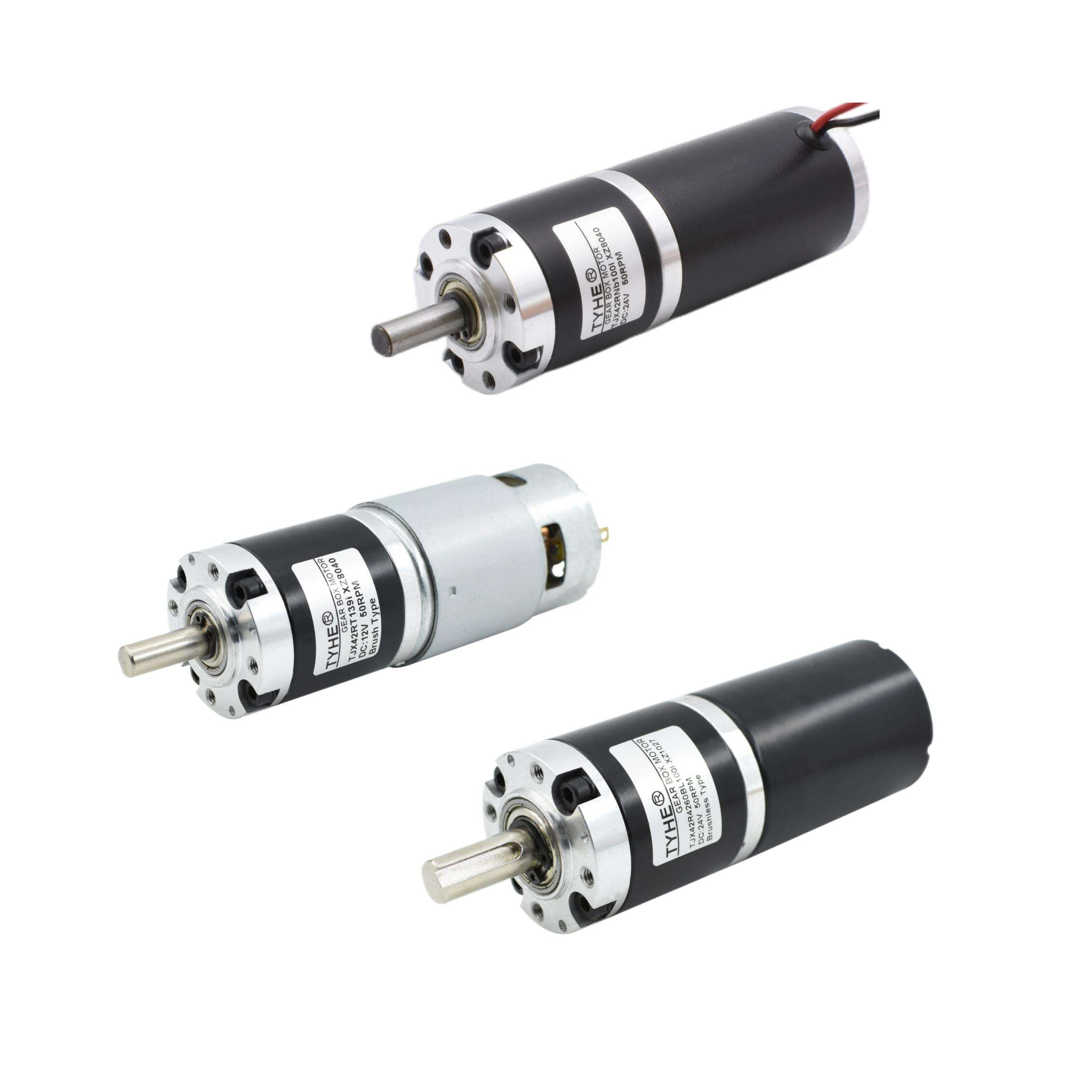
When selecting a motor for industrial applications, engineers often face the critical decision between a dc gear motor and a stepper motor. Both motor types offer distinct advantages and serve different purposes in automation systems, robotics, and precision machinery. Understanding the fundamental differences between these motor technologies is essential for making informed decisions that optimize performance, efficiency, and cost-effectiveness in your specific application. The choice between a dc gear motor and a stepper motor can significantly impact your project's success, affecting everything from torque delivery to positional accuracy and overall system reliability.
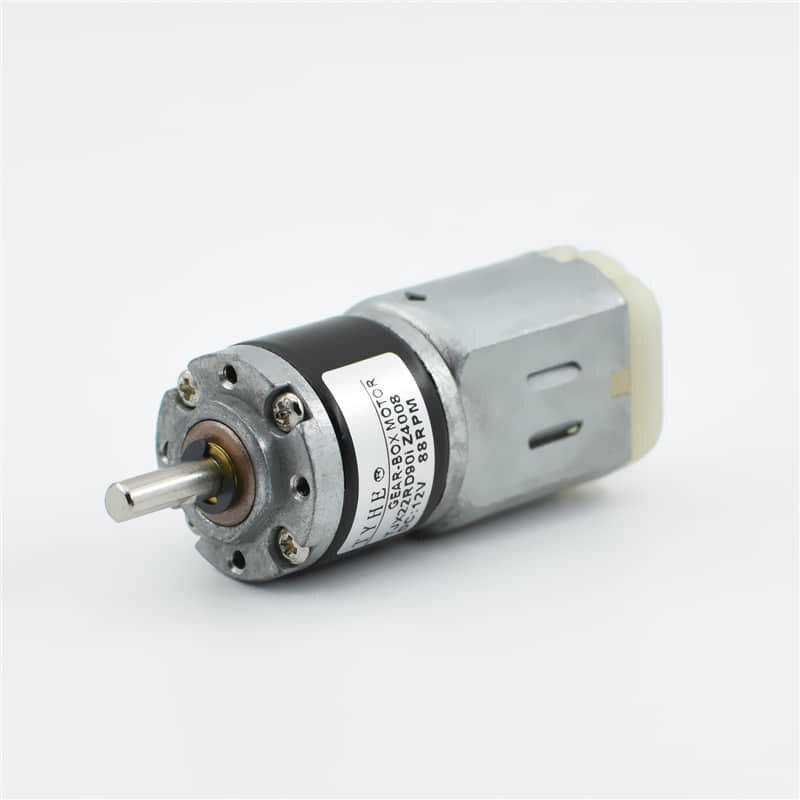
Understanding DC Gear Motor Fundamentals
Construction and Operating Principles
A dc gear motor combines a direct current motor with a gear reduction system to deliver high torque at lower speeds. The basic construction includes a DC motor connected to a gearbox containing multiple gear stages that reduce rotational speed while multiplying torque output. This configuration makes the dc gear motor particularly effective in applications requiring substantial force with controlled speed characteristics. The gear reduction ratio determines the final output specifications, allowing engineers to select the optimal balance between speed and torque for their specific requirements.
The operating principle of a dc gear motor relies on electromagnetic induction and mechanical advantage. When electrical current flows through the motor windings, it creates a magnetic field that interacts with permanent magnets or electromagnets to generate rotational motion. This rotation is then transmitted through the gear train, where each gear stage reduces speed and increases torque proportionally. The result is a motor system capable of delivering significant mechanical advantage while maintaining precise control over rotational parameters.
Performance Characteristics and Advantages
The performance profile of a dc gear motor includes several key advantages that make it suitable for numerous industrial applications. High torque output at low speeds is perhaps the most significant benefit, enabling these motors to drive heavy loads without requiring additional mechanical amplification. The inherent speed reduction also provides better control resolution, making it easier to achieve precise positioning and movement control in automated systems.
Another major advantage of the dc gear motor is its efficiency in converting electrical energy to mechanical work. The gear reduction system allows the motor to operate at its optimal speed range while delivering the required output characteristics. This efficiency translates to reduced power consumption, lower operating temperatures, and extended service life. Additionally, dc gear motors typically exhibit smooth operation with minimal vibration, contributing to overall system stability and reduced wear on connected components.
Stepper Motor Technology Overview
Design Architecture and Control Methods
Stepper motors represent a different approach to motion control, utilizing electromagnetic pulses to achieve precise incremental movement. Unlike a dc gear motor that provides continuous rotation, stepper motors move in discrete steps, typically ranging from 0.9 to 3.6 degrees per step. This fundamental design difference makes stepper motors ideal for applications requiring precise positioning without feedback systems, as each input pulse corresponds to a specific angular displacement.
The control methodology for stepper motors involves sending sequential electrical pulses to different winding phases, causing the rotor to advance one step per pulse. This open-loop control system eliminates the need for position feedback sensors in many applications, simplifying system architecture and reducing costs. Modern stepper motor controllers can implement various driving techniques, including full-step, half-step, and microstepping modes, providing different levels of resolution and smoothness.
Precision and Positioning Capabilities
The primary strength of stepper motors lies in their exceptional positioning accuracy and repeatability. Each step represents a precise angular movement, allowing for exact positioning without accumulating errors over time. This characteristic makes stepper motors particularly valuable in applications such as 3D printing, CNC machinery, and automated assembly systems where precise positioning is critical for proper operation.
Stepper motors also offer excellent holding torque when energized, maintaining their position against external forces without additional braking mechanisms. This capability is especially useful in vertical applications or systems where maintaining position during power interruptions is important. The ability to control speed through pulse frequency adjustment provides another layer of flexibility, allowing dynamic speed changes during operation.
Comparative Analysis of Performance Parameters
Torque Characteristics and Load Handling
When comparing torque delivery, a dc gear motor typically provides superior continuous torque output, especially at lower speeds. The gear reduction system multiplies the base motor torque, creating significant mechanical advantage for driving heavy loads. This makes dc gear motors particularly suitable for applications involving conveyor systems, lifting mechanisms, and other high-load scenarios where sustained torque delivery is essential.
Stepper motors, while capable of producing substantial holding torque, generally experience torque reduction as speed increases. The torque-speed relationship in stepper motors creates limitations for high-speed, high-load applications. However, stepper motors excel in situations where precise positioning is more important than maximum torque output, making them ideal for positioning systems and applications with moderate load requirements.
Speed Control and Dynamic Response
Speed control characteristics differ significantly between these motor types. A dc gear motor provides smooth, continuous speed variation with excellent dynamic response to control signals. The ability to operate efficiently across a wide speed range makes dc gear motors versatile for applications requiring variable speed operation. The gear reduction also helps maintain torque at lower speeds, ensuring consistent performance throughout the operating range.
Stepper motors offer discrete speed control through pulse frequency modulation, providing excellent repeatability but potentially less smooth operation at very low speeds. The step-wise motion can sometimes result in vibration or resonance issues, particularly at certain operating frequencies. However, modern microstepping techniques have largely addressed these concerns, providing much smoother operation while maintaining positioning accuracy.
Application-Specific Selection Criteria
Industrial Automation Requirements
In industrial automation environments, the choice between a dc gear motor and stepper motor depends heavily on specific operational requirements. For continuous-duty applications such as conveyor systems, mixing equipment, or material handling, dc gear motors often provide superior performance due to their high torque output and efficient continuous operation. The robust construction and ability to handle varying loads make them reliable choices for demanding industrial environments.
Conversely, stepper motors excel in automation applications requiring precise positioning, such as pick-and-place systems, indexing tables, and automated testing equipment. The ability to achieve accurate positioning without complex feedback systems simplifies system design and reduces overall costs. When positioning accuracy is paramount and loads are moderate, stepper motors provide an excellent solution for industrial automation needs.
Robotics and Precision Machinery
Robotics applications present unique challenges that influence motor selection decisions. Joint actuators in robotic arms often benefit from dc gear motor technology due to the high torque requirements and need for smooth, continuous motion. The gear reduction provides the necessary mechanical advantage while maintaining precise control over joint movements. For larger robots or those handling substantial payloads, the superior torque characteristics of dc gear motors make them the preferred choice.
Precision machinery applications, particularly those involving CNC systems, 3D printers, and coordinate measuring machines, frequently utilize stepper motors for their exceptional positioning accuracy. The ability to achieve precise incremental movements without feedback systems reduces system complexity while maintaining excellent repeatability. In applications where positioning accuracy is critical and loads are manageable, stepper motors provide cost-effective solutions with reliable performance.
Cost Considerations and Economic Factors
Initial Investment and System Complexity
The initial cost comparison between dc gear motor and stepper motor systems involves multiple factors beyond just the motor price. A dc gear motor system typically requires more sophisticated control electronics, including motor drivers capable of handling higher current levels and potentially more complex feedback systems. However, the robust construction and longer service life often justify the higher initial investment through reduced maintenance costs and improved reliability.
Stepper motor systems generally have lower initial costs, particularly for positioning applications where feedback sensors are not required. The simpler control electronics and open-loop operation reduce system complexity and associated costs. However, for high-performance applications requiring microstepping or advanced control features, the cost advantage may diminish as more sophisticated control systems become necessary.
Operating Costs and Maintenance Requirements
Long-term operating costs include energy consumption, maintenance requirements, and replacement considerations. A dc gear motor typically offers better energy efficiency, particularly in continuous-duty applications, resulting in lower electrical operating costs. The gear reduction allows the motor to operate in its most efficient speed range while delivering the required output characteristics, maximizing overall system efficiency.
Stepper motors may consume more power due to their constant energization requirements, even when stationary. However, modern stepper motor controllers incorporate power-saving features that reduce current when holding position, improving overall efficiency. Maintenance requirements for both motor types are generally minimal, though dc gear motors may require periodic gear lubrication depending on the specific design and operating conditions.
Selection Guidelines and Best Practices
Application Assessment Framework
Selecting the appropriate motor technology requires systematic evaluation of application requirements. Start by analyzing the primary performance requirements, including torque needs, speed ranges, positioning accuracy, and duty cycle characteristics. For applications requiring high continuous torque output, variable speed operation, or heavy load handling, a dc gear motor typically provides superior performance and reliability.
When positioning accuracy is the primary concern and loads are moderate, stepper motors offer excellent solutions with simplified control requirements. Consider the operating environment, including temperature ranges, vibration levels, and contamination exposure, as these factors can influence motor selection and longevity. The availability of technical support and replacement parts should also factor into the decision-making process.
Integration and System Compatibility
Successful motor integration requires careful consideration of existing system architecture and control methods. A dc gear motor may require more sophisticated control interfaces but often integrates well with analog control systems and provides smooth interface with existing automation infrastructure. The continuous nature of dc motor operation typically matches well with traditional control methodologies.
Stepper motor integration focuses on digital pulse control systems and positioning algorithms. Modern automation systems with digital control capabilities can easily accommodate stepper motor requirements, providing precise positioning control through software-based pulse generation. Consider the availability of compatible drivers, control software, and system integration support when making your selection.
FAQ
What are the main advantages of using a dc gear motor over a stepper motor
The primary advantages of a dc gear motor include higher continuous torque output, better efficiency in continuous-duty applications, smoother operation with minimal vibration, and superior performance with heavy loads. The gear reduction system provides mechanical advantage while allowing the motor to operate in its optimal speed range, resulting in better overall system efficiency and reliability for demanding applications.
When should I choose a stepper motor instead of a dc gear motor
Choose a stepper motor when precise positioning accuracy is critical, loads are moderate, and you need open-loop control without feedback sensors. Stepper motors excel in applications like 3D printing, CNC machinery, and automated positioning systems where exact incremental movements are required. They are also preferable when system simplicity and lower initial costs are important factors in your application.
How do maintenance requirements compare between these motor types
Both motor types have relatively low maintenance requirements, but they differ in specific areas. A dc gear motor may require periodic gear lubrication depending on the design and operating conditions, while stepper motors are typically maintenance-free. However, dc gear motors often have longer service lives in continuous-duty applications due to their robust construction and efficient operation characteristics.
Can I achieve precise positioning with a dc gear motor
Yes, a dc gear motor can achieve precise positioning when combined with appropriate feedback systems such as encoders or resolvers. While this adds system complexity compared to stepper motors, it allows for very precise control with the added benefits of higher torque output and better efficiency. The choice depends on whether the application requirements justify the additional complexity and cost of the feedback system.
