
 EN
EN
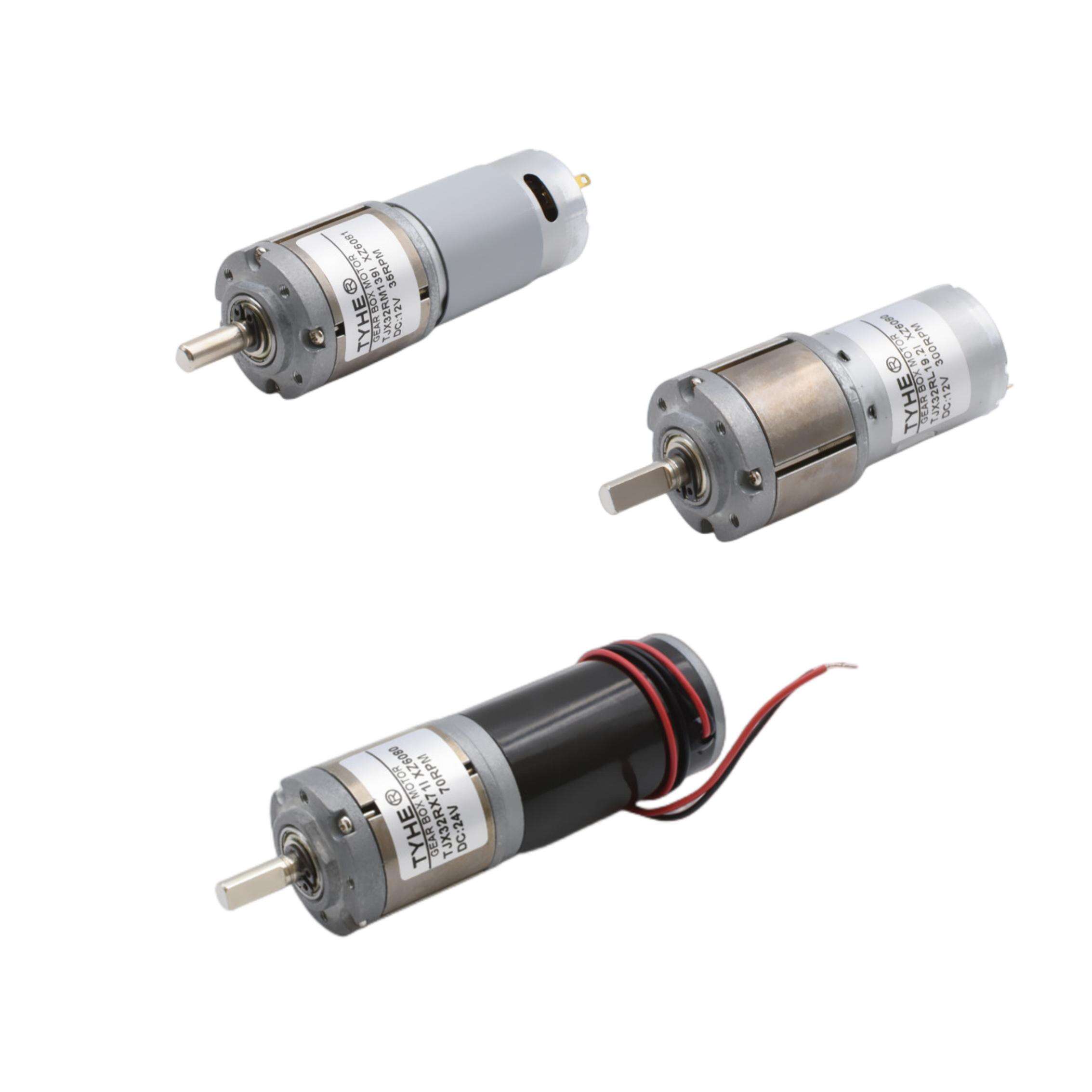
When selecting motors for industrial applications, engineers face a critical decision between standard DC motors and specialized gear motor configurations. The dc planetary gear motor represents a sophisticated solution that combines the advantages of DC motor technology with precision gear reduction systems. Understanding these differences is essential for making informed decisions that impact performance, efficiency, and long-term operational costs in demanding applications.
Fundamental Design Architecture
Internal Structure Comparison
Regular DC motors feature a straightforward design with a rotor, stator, commutator, and brushes working together to convert electrical energy into rotational motion. The simplicity of this configuration makes standard DC motors cost-effective and suitable for applications requiring high-speed operation with minimal torque requirements. However, this basic structure limits their effectiveness in applications demanding precise control and high torque output at lower speeds.
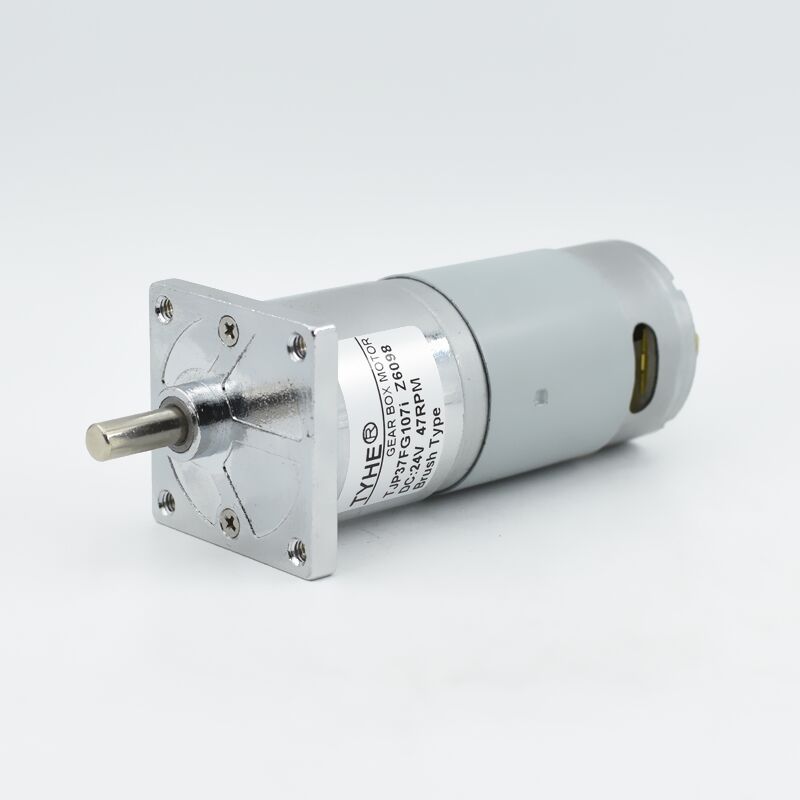
A dc planetary gear motor incorporates an additional planetary gear system within the motor housing, creating a compact yet powerful drive solution. This integrated approach combines the motor and gearbox into a single unit, eliminating the need for external coupling mechanisms. The planetary gear arrangement consists of a central sun gear, multiple planet gears, and an outer ring gear, all working in harmony to provide exceptional torque multiplication while maintaining compact dimensions.
Space Efficiency Considerations
Space constraints in modern industrial applications make the compact design of dc planetary gear motor systems particularly attractive. Traditional motor and gearbox combinations require additional mounting space, coupling hardware, and alignment considerations that can significantly increase the overall footprint of the drive system. The integrated nature of planetary gear motors reduces installation complexity while maximizing power density within confined spaces.
The coaxial arrangement of planetary gears allows for maximum torque transmission through a minimal cross-sectional area. This design philosophy enables engineers to achieve substantial torque multiplication without the bulk associated with traditional gear reduction systems, making planetary gear motors ideal for robotic applications, precision machinery, and automated equipment where space optimization is paramount.
Performance Characteristics Analysis
Torque Output and Speed Control
Standard DC motors excel in applications requiring high rotational speeds with relatively low torque demands. Their direct-drive configuration provides excellent speed regulation and rapid acceleration capabilities, making them suitable for fans, pumps, and other applications where speed is more critical than torque. However, when high torque is required, external gear reduction becomes necessary, adding complexity and potential failure points to the system.
The dc planetary gear motor delivers exceptional torque multiplication through its integrated gear system, typically achieving gear ratios ranging from 3:1 to over 1000:1. This capability allows the motor to provide substantial holding torque and precise positioning control, essential for applications such as conveyor systems, lift mechanisms, and precision positioning equipment. The gear reduction also enables the motor to operate at optimal efficiency points while delivering the required output characteristics.
Efficiency and Power Consumption
Energy efficiency considerations play a crucial role in motor selection, particularly in applications requiring continuous operation or battery-powered systems. Regular DC motors typically achieve their highest efficiency at specific speed ranges, often requiring operation at suboptimal points when torque requirements change. This mismatch between motor characteristics and application demands can result in increased power consumption and reduced operational efficiency.
Planetary gear motors optimize efficiency through their ability to operate the internal DC motor at its most efficient speed range while providing the required output characteristics through gear reduction. The high-efficiency planetary gear train, often exceeding 90% efficiency, minimizes power losses during torque conversion. This configuration enables the dc planetary gear motor to maintain consistent efficiency across a broader range of operating conditions compared to standard motors requiring external speed or torque modification.
Application Suitability and Selection Criteria
Industrial Applications and Use Cases
Regular DC motors find their optimal applications in scenarios requiring high-speed operation with minimal torque demands. Ventilation systems, spindle drives, and pumping applications benefit from the direct-drive capabilities and rapid response characteristics of standard DC motors. The simplicity of control circuitry and the ability to achieve precise speed regulation make them ideal for applications where complexity reduction is prioritized over torque output.
The dc planetary gear motor excels in applications demanding precise positioning, high torque output, or variable speed operation under load. Robotic joints, conveyor systems, medical equipment, and automotive applications leverage the superior torque characteristics and compact design of planetary gear motors. The integrated design eliminates backlash issues common in externally coupled systems while providing exceptional reliability in demanding operating environments.
Maintenance and Operational Considerations
Maintenance requirements differ significantly between regular DC motors and planetary gear motor systems. Standard DC motors require periodic brush replacement and commutator maintenance, but their simple construction facilitates straightforward servicing procedures. The absence of complex gear trains reduces the number of wear components and simplifies troubleshooting procedures, making them attractive for applications where maintenance resources are limited.
While dc planetary gear motor systems incorporate additional mechanical components, modern designs utilize advanced lubrication systems and precision manufacturing techniques to minimize maintenance requirements. The enclosed gear system operates in a controlled environment with proper lubrication, often extending operational life beyond that of externally mounted gear systems. However, when maintenance is required, the integrated design may necessitate specialized service procedures and replacement of the entire unit rather than individual components.
Cost Analysis and Economic Factors
Initial Investment Considerations
The upfront cost difference between regular DC motors and planetary gear motor systems reflects the complexity and manufacturing precision required for each solution. Standard DC motors represent the most economical option for applications where their performance characteristics align with system requirements. The simplicity of construction and widespread availability contribute to competitive pricing and reduced lead times for standard configurations.
A dc planetary gear motor commands a premium price due to the precision manufacturing requirements and integrated design complexity. However, this initial investment often proves economical when considering the total system cost, including external gearing, coupling hardware, mounting systems, and installation labor. The integrated approach eliminates many auxiliary components while providing superior performance characteristics that may reduce overall system complexity and associated costs.
Long-term Operational Economics
Lifecycle cost analysis reveals important economic considerations beyond initial purchase price. Regular DC motors may require additional components such as external gearboxes, couplings, and control systems to achieve desired performance characteristics. These additional components introduce potential failure points and increase maintenance complexity, potentially offsetting initial cost advantages over extended operational periods.
The integrated design of dc planetary gear motor systems often results in lower total cost of ownership through reduced maintenance requirements, improved reliability, and enhanced efficiency. The elimination of external coupling mechanisms reduces alignment issues and wear-related failures, while the optimized operating characteristics can reduce energy consumption and extend component life. These factors contribute to improved return on investment in applications where reliability and efficiency are paramount.
Technical Specifications and Performance Metrics
Speed and Torque Characteristics
Performance specifications provide quantitative measures for comparing motor technologies and selecting optimal solutions for specific applications. Regular DC motors typically operate at base speeds ranging from 1000 to 10000 RPM, depending on voltage and construction details. Torque output remains relatively constant across the operating speed range, with peak torque available at startup and decreasing as speed increases due to back-EMF effects.
The dc planetary gear motor modifies these characteristics through gear reduction, trading speed for torque multiplication. Output speeds typically range from 1 to 500 RPM, depending on gear ratio selection, while torque output increases proportionally to the gear reduction ratio. This transformation enables the motor system to provide substantial holding torque and precise low-speed control capabilities essential for positioning and lifting applications.
Control and Integration Capabilities
Modern control requirements demand sophisticated integration capabilities and precise response characteristics from motor systems. Standard DC motors offer excellent speed control through voltage regulation and can achieve rapid acceleration and deceleration when properly controlled. The linear relationship between applied voltage and motor speed simplifies control system design and enables straightforward implementation of closed-loop speed regulation systems.
Advanced dc planetary gear motor systems incorporate integrated encoders and feedback systems that enable precise position control and sophisticated motion profiles. The gear reduction inherently provides mechanical advantage for overcoming system inertia while maintaining precise control resolution. Many modern units include built-in controllers and communication interfaces that simplify integration with industrial automation systems and enable advanced control strategies such as coordinated multi-axis motion.
FAQ
What are the main advantages of using a dc planetary gear motor over a regular DC motor
The primary advantages include significantly higher torque output, compact integrated design, improved efficiency at low speeds, precise positioning control, and reduced system complexity. Planetary gear motors eliminate the need for external gearboxes while providing exceptional torque multiplication and maintaining compact dimensions ideal for space-constrained applications.
How do maintenance requirements differ between these motor types
Regular DC motors require periodic brush replacement and commutator maintenance but offer simpler servicing procedures. Planetary gear motors have more complex internal mechanisms but often feature sealed designs with extended lubrication intervals. While planetary systems may require complete unit replacement when major service is needed, their integrated design typically provides longer operational life between maintenance intervals.
Which motor type is more cost-effective for industrial applications
Cost-effectiveness depends on specific application requirements and total system considerations. Regular DC motors have lower initial costs but may require additional components for torque multiplication or speed reduction. Planetary gear motors command higher upfront investment but often provide better total cost of ownership through reduced complexity, improved efficiency, and enhanced reliability in demanding applications.
Can dc planetary gear motor systems handle variable load conditions effectively
Yes, planetary gear motor systems excel in variable load applications due to their high torque output capability and mechanical advantage provided by gear reduction. The integrated design maintains consistent performance across varying load conditions while the gear system provides mechanical buffering that protects the internal motor from sudden load changes and impact forces.
Table of Contents
- Fundamental Design Architecture
- Performance Characteristics Analysis
- Application Suitability and Selection Criteria
- Cost Analysis and Economic Factors
- Technical Specifications and Performance Metrics
-
FAQ
- What are the main advantages of using a dc planetary gear motor over a regular DC motor
- How do maintenance requirements differ between these motor types
- Which motor type is more cost-effective for industrial applications
- Can dc planetary gear motor systems handle variable load conditions effectively
