All Categories

Understanding DC Gear Motor Speed Control Methods

2026-02-25 11:14:00
Understanding DC Gear Motor Speed Control Methods

Speed control represents one of the most critical aspects of dc gear motor applications across industrial automation, robotics, and precision machinery. Modern manufacturing processes demand precise velocity regulation to ensure optimal performance, energy efficiency, and operational reliability. Understanding the various methods available for controlling dc gear motor speed enables engineers and technicians to select the most appropriate solution for their specific application requirements while maximizing system performance and longevity.

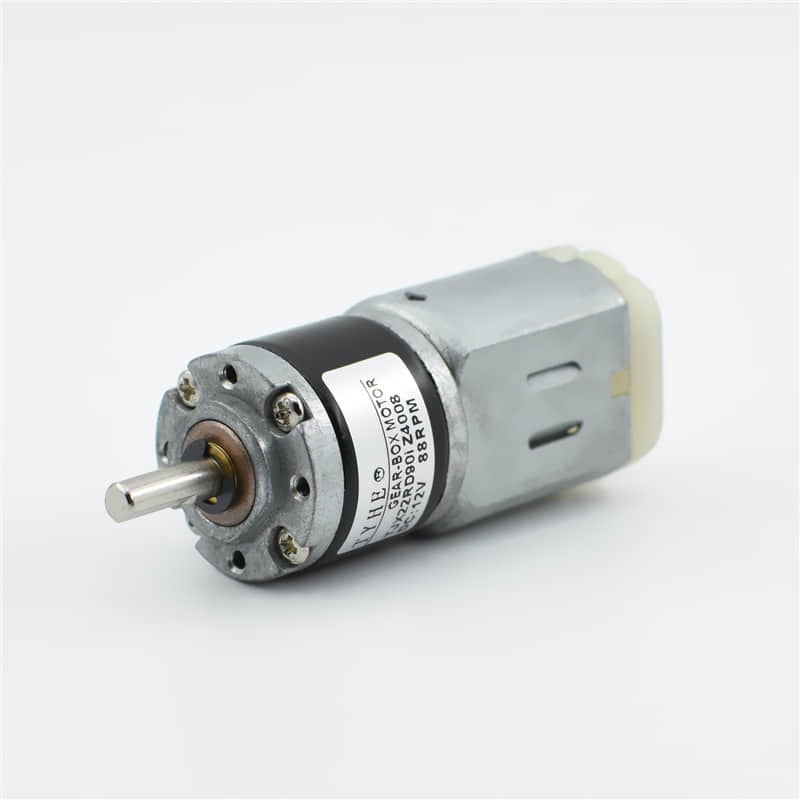
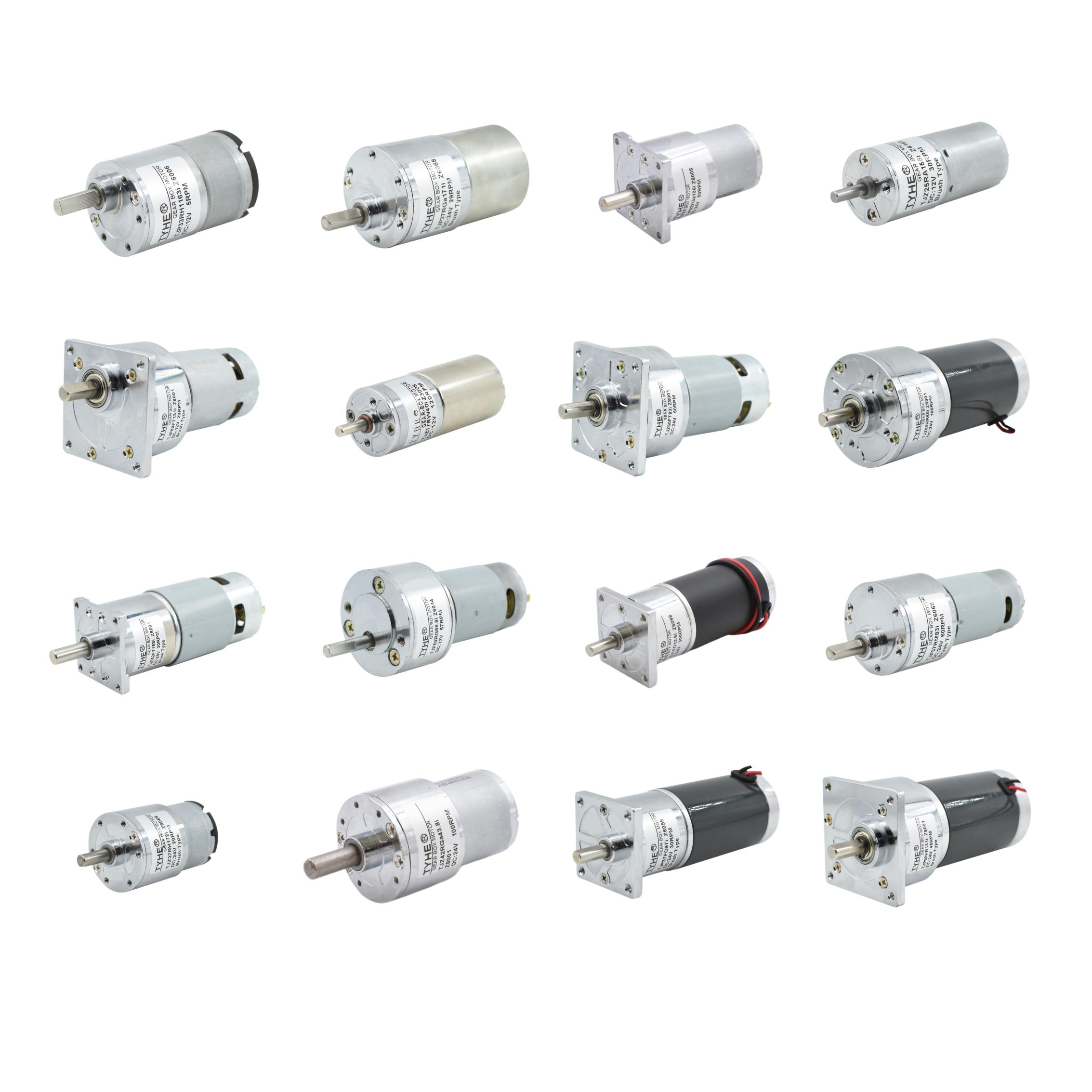
dc gear motor

Fundamental Principles of DC Gear Motor Speed Control

Electromagnetic Relationship in Speed Regulation

The speed of a dc gear motor depends primarily on the applied voltage, armature current, and magnetic field strength within the motor assembly. According to electromagnetic principles, motor speed increases proportionally with applied voltage while maintaining constant load conditions. This fundamental relationship forms the basis for most speed control methodologies employed in industrial applications. Engineers must consider the gear reduction ratio when calculating final output speed, as the gearbox multiplies torque while reducing rotational velocity according to the gear train configuration.

Back electromotive force plays a crucial role in dc gear motor speed regulation, acting as a natural speed-limiting mechanism. As motor speed increases, the back EMF rises proportionally, effectively reducing the net voltage available for acceleration. This self-regulating characteristic provides inherent stability in dc gear motor systems, preventing runaway conditions under normal operating circumstances. Understanding this relationship enables precise speed prediction and control system design for various industrial applications.

Gear Reduction Impact on Speed Control

The integrated gearbox in a dc gear motor significantly influences speed control characteristics and system response time. High gear ratios provide excellent torque multiplication but reduce maximum achievable speeds, while lower ratios maintain higher velocities at reduced torque output. Control system designers must account for gear backlash, friction losses, and mechanical inertia when implementing speed regulation strategies. These factors directly affect system responsiveness, positioning accuracy, and overall performance in precision applications.

Mechanical efficiency of the gear train varies with speed, load, and lubrication conditions, requiring compensation in advanced control algorithms. Modern dc gear motor designs incorporate precision-machined gears with optimized tooth profiles to minimize backlash and improve speed control accuracy. The combination of electromagnetic speed control at the motor level and mechanical speed reduction through gearing provides exceptional flexibility in meeting diverse application requirements across multiple industries.

Voltage-Based Speed Control Techniques

Linear Voltage Regulation Methods

Linear voltage regulation represents the most straightforward approach to dc gear motor speed control, utilizing variable resistors or linear regulators to adjust applied voltage. This method provides smooth speed variation across the entire operating range while maintaining excellent torque characteristics at reduced speeds. Series resistance control offers simplicity and cost-effectiveness for applications requiring basic speed adjustment without sophisticated feedback mechanisms. However, linear methods result in significant power dissipation as heat, reducing overall system efficiency and requiring adequate thermal management.

Rheostat-based control systems remain popular in educational and simple industrial applications where precise speed regulation is less critical than cost considerations. The linear relationship between control input and dc gear motor speed simplifies system design and troubleshooting procedures. Engineers must consider the power rating requirements for control elements, as they must handle the full motor current during operation. Proper heat dissipation measures become essential to prevent component failure and maintain consistent performance over extended operating periods.

Switching Voltage Regulators

Switching voltage regulators offer superior efficiency compared to linear methods by rapidly switching the supply voltage on and off at high frequencies. This technique, known as switched-mode power supply control, significantly reduces power losses while maintaining precise voltage regulation for dc gear motor applications. Buck converters provide step-down voltage conversion with excellent efficiency ratings exceeding ninety percent under optimal conditions. The high-frequency switching minimizes electromagnetic interference when properly filtered and shielded.

Boost and buck-boost converter topologies enable dc gear motor operation at voltages higher than the available supply, expanding application flexibility in battery-powered and renewable energy systems. Advanced switching regulators incorporate current limiting, thermal protection, and soft-start features to protect both the controller and motor from adverse operating conditions. Proper inductor and capacitor selection ensures stable regulation while minimizing ripple voltage that could affect motor performance or generate unwanted acoustic noise.

Pulse Width Modulation Control Systems

PWM Fundamentals and Implementation

Pulse Width Modulation represents the most widely adopted method for modern dc gear motor speed control due to its exceptional efficiency and precise regulation capabilities. PWM controllers rapidly switch the motor supply between full voltage and zero voltage, varying the duty cycle to control average power delivery. The motor's electrical and mechanical time constants smooth these rapid pulses, resulting in continuous rotation at the desired speed. Switching frequencies typically range from several kilohertz to hundreds of kilohertz, well above audible ranges to minimize acoustic noise.

H-bridge configurations enable bidirectional PWM control, allowing both speed and direction regulation for dc gear motor applications. Four-quadrant operation becomes possible with proper H-bridge design, supporting motoring and regenerative braking in both directions. Microcontroller-based PWM generators provide exceptional flexibility and integration capabilities with other system functions. Dead-time insertion prevents shoot-through conditions that could damage switching devices, while advanced PWM techniques like space vector modulation optimize harmonic content and efficiency.

Advanced PWM Techniques

Complementary PWM strategies reduce electromagnetic interference and improve current waveform quality in dc gear motor applications. Synchronized switching minimizes harmonic generation while maintaining precise speed control across varying load conditions. Phase-shifted PWM techniques distribute switching losses among multiple devices in parallel configurations, enabling higher power applications with improved thermal management. These advanced methods require sophisticated control algorithms but deliver superior performance in demanding industrial environments.

Adaptive PWM frequency adjustment optimizes efficiency and acoustic performance based on operating conditions and load requirements. Variable frequency PWM controllers automatically adjust switching rates to minimize losses while maintaining regulation accuracy. Current mode control combines PWM with real-time current feedback to provide exceptional torque regulation and overcurrent protection. These intelligent control systems adapt to changing conditions while protecting both the dc gear motor and drive electronics from damage.

Feedback Control Systems and Sensors

Encoder-Based Speed Feedback

Optical encoders provide precise speed and position feedback for closed-loop dc gear motor control systems, enabling exceptional accuracy in positioning and velocity regulation applications. Incremental encoders generate pulse trains proportional to shaft rotation, while absolute encoders provide unique position information without reference counting. The resolution of encoder feedback directly impacts control system precision, with higher line counts enabling more accurate speed regulation and smoother operation at low velocities. Proper encoder mounting and coupling prevent mechanical backlash from affecting measurement accuracy.

Digital signal processing of encoder feedback enables advanced control algorithms including proportional-integral-derivative regulation, adaptive control, and predictive compensation. High-resolution encoders combined with sophisticated processing deliver positioning accuracies measured in arc-seconds for precision dc gear motor applications. Environmental considerations such as temperature, vibration, and contamination influence encoder selection and installation practices. Sealed optical encoders provide reliable operation in harsh industrial environments while maintaining measurement precision over extended service intervals.

Alternative Feedback Technologies

Hall effect sensors offer cost-effective speed feedback for dc gear motor applications where high precision is less critical than reliability and simplicity. These solid-state devices detect magnetic field variations from permanent magnets attached to the motor shaft, generating digital pulse signals proportional to rotational velocity. Hall sensors withstand harsh environmental conditions including temperature extremes, moisture, and electromagnetic interference better than optical alternatives. Simple signal conditioning circuits convert Hall sensor outputs into formats compatible with standard control systems.

Tachometer generators provide analog voltage signals directly proportional to dc gear motor speed, simplifying control circuit design for basic applications. These small DC generators mechanically coupled to the motor shaft eliminate the need for complex signal processing while delivering excellent linearity across the operating speed range. Resolver-based feedback systems offer exceptional reliability in extreme environments where electronic sensors might fail. The analog nature of tachometer and resolver signals provides inherent immunity to digital noise and electromagnetic interference common in industrial settings.

Electronic Speed Controllers and Drive Circuits

Integrated Motor Drive Solutions

Modern integrated motor drives combine power switching, control processing, and protection functions in compact packages optimized for dc gear motor applications. These intelligent drives incorporate microprocessors running sophisticated control algorithms while providing comprehensive protection against overcurrent, overtemperature, and fault conditions. Communication interfaces enable integration with supervisory control systems using standard industrial protocols including Modbus, CAN bus, and Ethernet-based fieldbus networks. Parameter programming through digital interfaces allows customization of acceleration rates, speed limits, and protection thresholds.

Sensorless control algorithms estimate dc gear motor speed and position without external feedback devices, reducing system complexity and cost while maintaining adequate performance for many applications. These techniques analyze motor current and voltage waveforms to determine rotor position and velocity through mathematical modeling and signal processing. Advanced drives incorporate machine learning algorithms that adapt to individual motor characteristics over time, optimizing performance and efficiency. Diagnostic capabilities monitor system health and predict maintenance requirements, reducing unplanned downtime in critical applications.

Custom Drive Circuit Design

Application-specific drive circuits enable optimization of dc gear motor control for specialized requirements including extreme environments, unusual power levels, or unique performance characteristics. Custom designs allow integration of additional functionality such as position control, multi-axis coordination, and application-specific safety features. Modular circuit architectures facilitate testing, maintenance, and future upgrades while minimizing development costs. Proper thermal design ensures reliable operation under maximum load conditions while minimizing component stress and extending service life.

Electromagnetic compatibility considerations become critical in custom drive designs, requiring careful attention to circuit layout, grounding, and shielding practices. Switch-mode power circuits generate high-frequency harmonics that must be filtered to prevent interference with sensitive electronic equipment. Protection circuits including fuses, circuit breakers, and electronic current limiting prevent damage from fault conditions while enabling safe system shutdown. Redundant safety features provide additional protection in critical applications where dc gear motor failure could result in personnel injury or equipment damage.

Applications and Industry-Specific Requirements

Precision Manufacturing Applications

Precision manufacturing equipment demands exceptional speed stability and positioning accuracy from dc gear motor control systems, often requiring regulation better than one percent of nominal speed. CNC machine tools, coordinate measuring machines, and semiconductor fabrication equipment exemplify applications where precise speed control directly impacts product quality and dimensional accuracy. Multi-axis coordination requires synchronized speed control across multiple dc gear motor drives to maintain proper tool paths and prevent mechanical binding. Real-time control systems with deterministic response times ensure consistent performance despite varying load conditions.

Temperature compensation algorithms account for thermal effects on dc gear motor characteristics, maintaining accuracy across environmental variations common in production facilities. Vibration isolation and mechanical damping complement electronic speed control to achieve the stability required for precision operations. Quality control systems monitor speed regulation performance continuously, triggering automatic adjustments or operator alerts when parameters drift beyond acceptable tolerances. Traceability requirements in regulated industries necessitate comprehensive logging of speed control parameters and performance metrics for audit and quality assurance purposes.

Automotive and Transportation Systems

Automotive applications utilize dc gear motor speed control in numerous subsystems including power windows, seat adjusters, sunroofs, and electric power steering assist mechanisms. These systems must operate reliably across extreme temperature ranges while meeting stringent electromagnetic compatibility and safety requirements. Automotive-grade components withstand vibration, humidity, and chemical exposure throughout vehicle service life. Cost optimization drives selection of control methods that provide adequate performance while minimizing component count and manufacturing complexity.

Electric and hybrid vehicles employ sophisticated dc gear motor control for traction motors, auxiliary systems, and regenerative braking applications. High-voltage systems require additional safety measures including isolation monitoring, fault detection, and emergency shutdown capabilities. Battery management integration optimizes energy utilization while protecting energy storage systems from damage. Advanced control algorithms coordinate multiple motors in all-wheel-drive configurations to maximize traction and stability under varying road conditions while minimizing energy consumption for extended range.

Troubleshooting and Maintenance Considerations

Common Speed Control Problems

Speed regulation problems in dc gear motor systems often result from power supply variations, control circuit component degradation, or mechanical issues within the motor or gearbox assembly. Irregular speed fluctuations typically indicate inadequate filtering in PWM control systems or electromagnetic interference affecting feedback sensors. Systematic diagnostic procedures help isolate the root cause of performance issues while minimizing downtime. Oscilloscope analysis of control signals reveals timing problems, noise issues, and component failures that affect speed regulation accuracy.

Thermal problems manifest as speed drift or intermittent operation, particularly in high-duty-cycle applications or inadequately ventilated installations. Component aging affects control circuit performance over time, requiring periodic calibration and adjustment to maintain original specifications. Mechanical wear in gearboxes increases backlash and friction, affecting speed regulation and positioning accuracy. Regular lubrication and mechanical inspection prevent many common failure modes while extending dc gear motor service life significantly.

Preventive Maintenance Strategies

Scheduled maintenance programs should include inspection of control circuit connections, verification of calibration accuracy, and cleaning of environmental contaminants from electronic assemblies. Performance trending identifies gradual degradation before it affects system operation, enabling proactive replacement of wearing components. Spare parts inventory should include critical control system components to minimize repair time when failures occur. Documentation of maintenance activities and performance measurements provides valuable data for optimizing service intervals and identifying recurring problems.

Environmental monitoring systems track temperature, humidity, and vibration levels that affect dc gear motor control system reliability and performance. Condition-based maintenance strategies utilize real-time monitoring data to schedule maintenance activities based on actual component condition rather than arbitrary time intervals. Training programs ensure maintenance personnel understand proper diagnostic procedures and safety requirements for working with motor control systems. Updated technical documentation and software tools support efficient troubleshooting and reduce the skill level required for routine maintenance tasks.

FAQ

What factors determine the best speed control method for a dc gear motor application

The optimal speed control method depends on several key factors including required speed regulation accuracy, efficiency requirements, cost constraints, and environmental conditions. PWM control offers the best combination of efficiency and precision for most applications, while simple voltage regulation may suffice for basic speed adjustment needs. Consider the load characteristics, duty cycle, and whether bidirectional operation is required when selecting control methods. Environmental factors such as temperature extremes, electromagnetic interference, and contamination influence the choice between different sensor technologies and control circuit designs.

How does gear reduction ratio affect dc gear motor speed control performance

Higher gear ratios provide increased torque multiplication but reduce maximum achievable speeds and affect system response time due to increased mechanical inertia. The gear reduction also amplifies the effects of backlash and friction on positioning accuracy, requiring more sophisticated control algorithms for precision applications. Speed control resolution improves with higher gear ratios since small changes in motor speed produce proportionally smaller changes in output speed. Engineers must balance torque requirements against speed and response time needs when selecting appropriate gear ratios for specific applications.

What maintenance procedures are essential for reliable dc gear motor speed control

Regular inspection of electrical connections, control circuit calibration verification, and cleaning of environmental contaminants from electronic assemblies form the foundation of preventive maintenance. Performance monitoring should track speed regulation accuracy, response time, and thermal characteristics to identify degradation trends before they affect operation. Mechanical components require periodic lubrication and inspection for wear, particularly in high-duty-cycle applications. Documentation of maintenance activities and performance measurements enables optimization of service intervals and identification of recurring problems that may require design modifications.

Can multiple dc gear motors be synchronized for coordinated motion control

Multiple dc gear motors can be synchronized using master-slave control architectures or distributed control systems with real-time communication between individual motor drives. Electronic line-shafting techniques provide virtual mechanical coupling between motors without physical connections, enabling precise speed and position coordination. Advanced control systems compensate for differences in motor characteristics and mechanical loading to maintain synchronization accuracy. Communication protocols such as EtherCAT or CAN bus provide the deterministic timing required for tight synchronization in multi-axis applications where coordination accuracy directly impacts product quality or safety.

understanding dc gear motor speed control methods-0