
 EN
EN
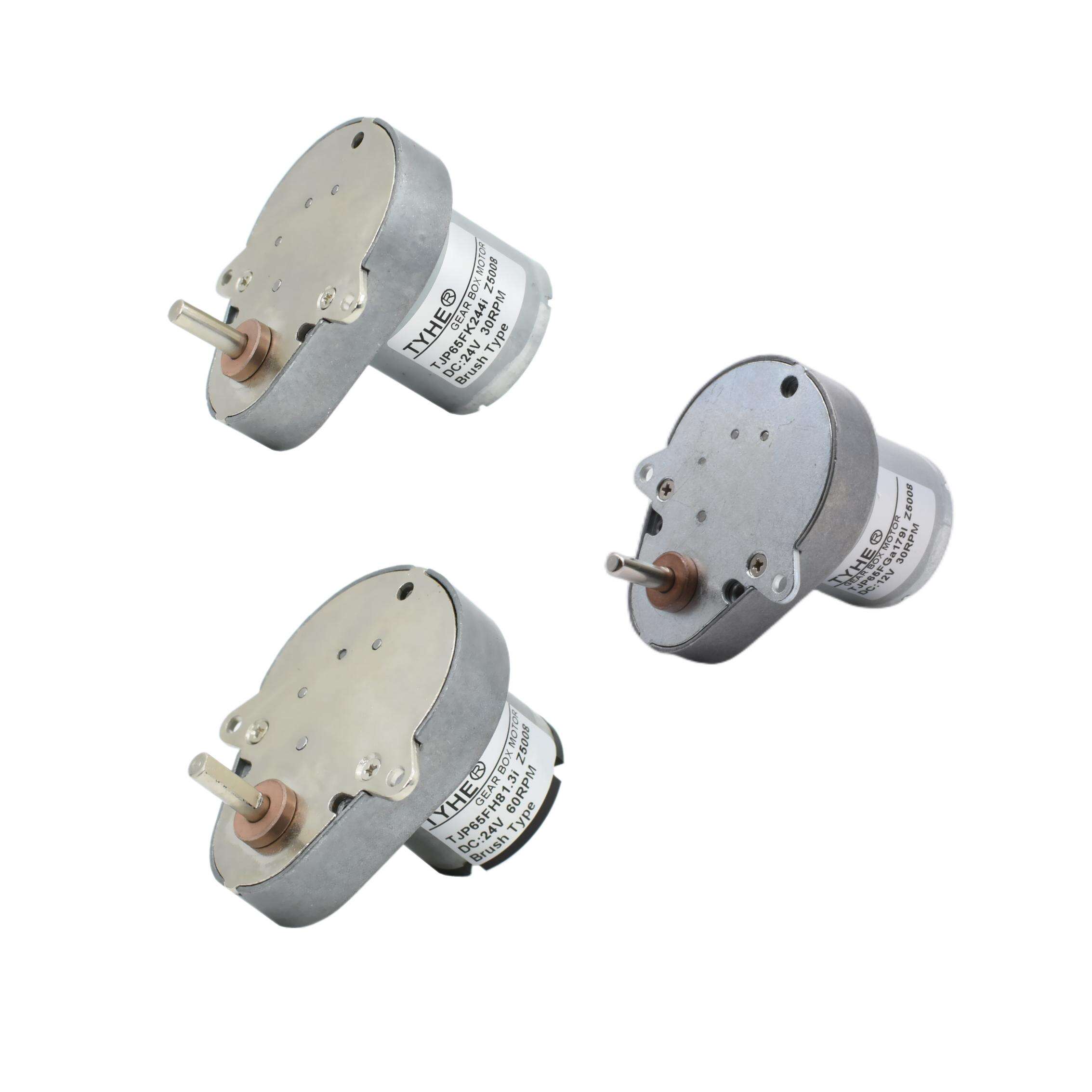
Understanding the various types of 12V DC motors available in today's market is essential for engineers, designers, and manufacturers seeking optimal performance in their applications. The 12v dc motor represents a versatile power solution that bridges the gap between efficiency and practicality across numerous industries. From automotive systems to industrial automation, robotics, and consumer electronics, these motors provide reliable operation while maintaining cost-effectiveness. Each type of 12v dc motor offers distinct advantages and characteristics that make them suitable for specific applications and operating conditions.
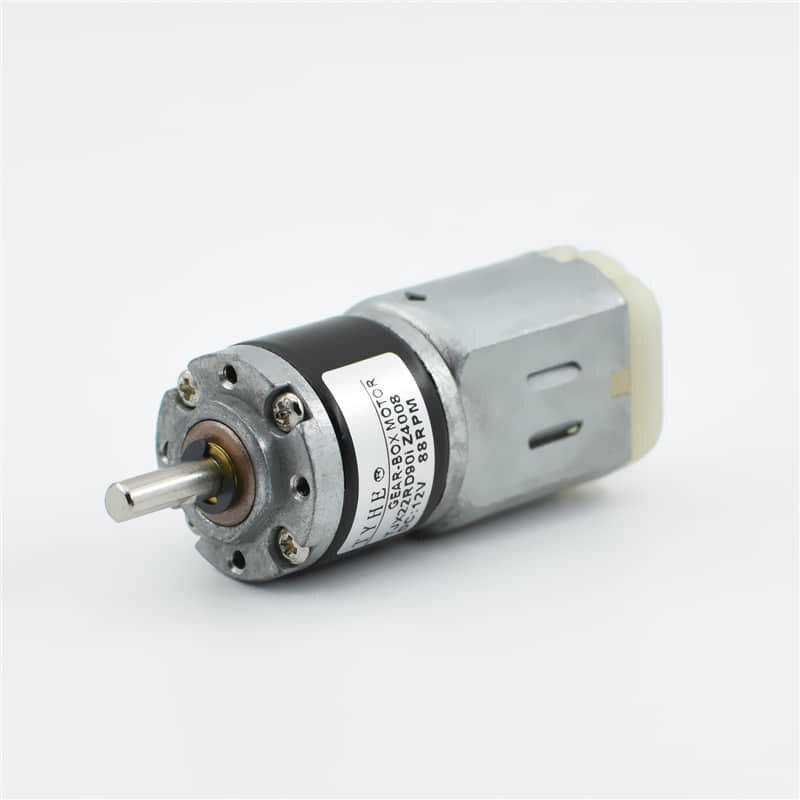
Brushed DC Motor Technology and Applications
Construction and Operating Principles
Brushed 12v dc motor designs feature a straightforward construction that has proven reliable for decades. The motor consists of a stator with permanent magnets or electromagnets, a rotor with windings, and carbon brushes that maintain electrical contact with the commutator segments. This traditional design allows for simple speed control through voltage regulation and provides excellent starting torque characteristics. The commutator mechanically switches the current direction in the rotor windings, creating continuous rotation without requiring external electronic switching circuits.
The operational simplicity of brushed motors makes them ideal for applications where cost-effectiveness takes precedence over maintenance considerations. These motors respond predictably to voltage changes, making speed control straightforward through basic electronic circuits or variable resistors. The torque-speed relationship remains linear across most of the operating range, providing consistent performance characteristics that engineers can easily incorporate into their designs.
Performance Characteristics and Limitations
Brushed 12v dc motor performance exhibits several notable characteristics that influence application selection. These motors typically achieve efficiency ratings between 75-80%, which, while lower than brushless alternatives, remains acceptable for many applications. The mechanical brushes create friction and electrical resistance, generating heat that must be managed through proper thermal design. Starting torque capabilities often exceed those of comparable brushless motors, making them suitable for applications requiring high initial torque.
Maintenance requirements represent the primary limitation of brushed motor technology. The carbon brushes gradually wear during operation, requiring periodic replacement to maintain optimal performance. Additionally, the sparking that occurs at the brush-commutator interface can generate electromagnetic interference and create debris within the motor housing. Operating speed limitations exist due to centrifugal forces acting on the brushes at high rotational speeds.
Brushless DC Motor Advantages and Implementation
Electronic Commutation Systems
Brushless 12v dc motor technology eliminates the mechanical commutation system entirely, replacing it with electronic switching circuits. Position sensors, typically Hall effect sensors or optical encoders, provide rotor position feedback to the electronic controller. This information enables precise timing of current switching in the stator windings, creating the rotating magnetic field necessary for motor operation. The absence of mechanical brushes eliminates friction losses and maintenance requirements associated with brush replacement.
The electronic speed controller represents a critical component in brushless motor systems, incorporating sophisticated algorithms to optimize performance across varying load conditions. These controllers can implement advanced features such as soft-start capabilities, regenerative braking, and precise speed regulation. The complexity of the control system increases the initial cost but provides superior performance characteristics and longer operational life compared to brushed alternatives.
Efficiency and Reliability Benefits
Modern brushless 12v dc motor designs achieve efficiency ratings exceeding 90%, significantly reducing power consumption and heat generation. The elimination of brush friction and electrical resistance contributes to this improved efficiency, while also reducing acoustic noise levels during operation. Higher power-to-weight ratios make brushless motors attractive for applications where space and weight constraints are critical factors.
Reliability improvements stem from the absence of wearing mechanical contacts, virtually eliminating the primary failure mode of brushed motors. Operating life can extend beyond 10,000 hours with minimal maintenance requirements, making brushless motors cost-effective despite higher initial investment. The reduced electromagnetic interference and absence of carbon dust generation make these motors suitable for clean room applications and sensitive electronic environments.
Stepper Motor Precision and Control Capabilities
Discrete Positioning Technology
Stepper 12v dc motor designs provide precise positioning capabilities through their unique construction and control methodology. These motors divide a complete rotation into a specific number of discrete steps, typically ranging from 200 to 400 steps per revolution. Each step represents a fixed angular displacement, enabling accurate positioning without requiring feedback sensors for basic applications. The rotor advances one step for each electrical pulse applied to the motor windings, creating a direct relationship between input pulses and output position.
Two primary stepper motor configurations dominate the market: permanent magnet steppers and hybrid steppers. Permanent magnet steppers offer good holding torque and simplified construction, while hybrid steppers combine permanent magnets with variable reluctance principles to achieve higher step resolution and improved torque characteristics. The choice between configurations depends on application requirements for precision, torque, and speed capabilities.
Motion Control Applications
Stepper 12v dc motor applications excel in scenarios requiring precise positioning without complex feedback systems. Computer numerical control machinery, 3D printers, and automated positioning systems frequently employ stepper motors for their predictable motion characteristics. The ability to achieve precise positioning through open-loop control simplifies system design and reduces component costs compared to servo motor systems requiring encoders and closed-loop feedback.
Speed limitations and torque characteristics represent important considerations in stepper motor applications. These motors typically operate most effectively at lower speeds, with torque decreasing significantly as rotational speed increases. Microstepping drive techniques can improve smoothness and reduce resonance issues, but may compromise holding torque capabilities. Proper matching of motor characteristics to application requirements ensures optimal performance and reliability.
Servo Motor Performance and Feedback Systems
Closed-Loop Control Architecture
Servo 12v dc motor systems incorporate sophisticated feedback mechanisms to achieve precise position, velocity, and torque control. High-resolution encoders or resolvers provide continuous position feedback to the servo drive, enabling real-time correction of any deviations from commanded motion profiles. This closed-loop architecture allows servo motors to maintain exceptional accuracy even under varying load conditions and external disturbances.
The servo drive electronics process position feedback signals and generate appropriate motor currents to maintain commanded performance. Advanced servo drives incorporate features such as gain scheduling, feedforward compensation, and disturbance rejection algorithms to optimize dynamic response characteristics. These capabilities enable servo motors to achieve settling times measured in milliseconds while maintaining position accuracy within micrometers or arc-seconds.
Dynamic Response and Applications
High-performance servo 12v dc motor systems excel in applications requiring rapid acceleration, precise positioning, and excellent dynamic response. Manufacturing automation, packaging machinery, and robotic systems frequently specify servo motors for their ability to execute complex motion profiles with exceptional repeatability. The combination of high torque-to-inertia ratios and sophisticated control algorithms enables these motors to achieve bandwidths exceeding 100 Hz in many applications.
Cost considerations and complexity represent the primary limitations of servo motor systems. The required feedback devices, sophisticated drive electronics, and tuning requirements increase both initial costs and commissioning time compared to simpler motor types. However, the performance capabilities and flexibility of servo systems often justify these investments in demanding applications where precision and dynamic response are critical requirements.
Gear Motor Integration and Torque Multiplication
Gearbox Selection and Ratios
Gear motor combinations multiply the torque output of standard 12v dc motor designs while reducing output speed according to the gear ratio. Various gearbox types serve different application requirements, including spur gear, planetary gear, worm gear, and harmonic drive configurations. Each gearbox type offers distinct advantages in terms of efficiency, backlash, size, and cost considerations that influence the overall system performance characteristics.
Planetary gearboxes provide excellent torque density and relatively low backlash, making them suitable for precision applications requiring high torque output. Worm gear reducers offer high reduction ratios in compact packages but typically exhibit lower efficiency due to sliding contact between gear elements. The selection of appropriate gear ratios involves balancing torque requirements, speed needs, and efficiency considerations for optimal system performance.
Application Considerations and Trade-offs
Gear motor systems enable standard 12v dc motor designs to serve applications requiring high torque at low speeds, expanding the range of suitable applications significantly. Conveyor systems, lifting mechanisms, and heavy-duty automation equipment benefit from the torque multiplication provided by integrated gear reducers. The combination of motor and gearbox characteristics must be carefully matched to avoid overloading either component during operation.
Efficiency losses through the gearbox reduce overall system efficiency, with typical planetary gear reducers achieving 90-95% efficiency per stage. Multiple reduction stages compound these losses, making single-stage reducers preferable when sufficient reduction ratios are achievable. Backlash in the gear train can affect positioning accuracy and system response, particularly in reversing applications where the backlash must be traversed before meaningful motion occurs.
Selection Criteria and Performance Optimization
Application Requirements Analysis
Selecting the optimal 12v dc motor type requires comprehensive analysis of application-specific requirements including torque, speed, duty cycle, and environmental conditions. Load characteristics significantly influence motor selection, as constant torque applications favor different motor types compared to constant power or variable load scenarios. Environmental factors such as temperature ranges, humidity, vibration, and contamination levels determine necessary protection ratings and construction materials.
Power supply characteristics and available space constraints further narrow the selection criteria for appropriate motor types. Battery-powered applications may prioritize efficiency to maximize operating time, while mains-powered systems might emphasize cost-effectiveness or performance capabilities. Physical constraints including mounting arrangements, shaft requirements, and connector types influence the final motor configuration selection process.
Performance Optimization Strategies
Optimizing 12v dc motor performance involves matching motor characteristics to load requirements while considering thermal management and control system capabilities. Proper sizing ensures adequate torque margins without excessive oversizing that increases costs and reduces efficiency. Thermal analysis prevents overheating during continuous operation or high-duty cycle applications, potentially requiring additional cooling or derating of motor specifications.
Control system integration plays a crucial role in achieving optimal performance from any motor type. Drive electronics should be matched to motor requirements, providing appropriate current capabilities, switching frequencies, and protection features. Proper cable selection and installation practices minimize voltage drops and electromagnetic interference that could degrade motor performance or system reliability.
FAQ
What are the main differences between brushed and brushless 12V DC motors
Brushed 12v dc motor designs use mechanical brushes and commutators for current switching, while brushless motors employ electronic switching circuits. Brushless motors offer higher efficiency, longer life, and reduced maintenance but require more complex control electronics. Brushed motors provide simpler control and lower initial costs but require periodic brush replacement and generate more electromagnetic interference.
How do I determine the appropriate torque rating for my application
Calculate the required torque by analyzing your load characteristics, including static friction, dynamic friction, acceleration requirements, and safety factors. Consider peak torque needs during starting or stall conditions, as these often exceed running torque requirements. Include gear reduction ratios if applicable, and ensure the selected 12v dc motor provides adequate torque margins for reliable operation under all expected conditions.
Can stepper motors provide smooth motion at low speeds
Stepper motors naturally produce discrete steps that can cause vibration and resonance issues, particularly at certain speed ranges. Microstepping drive techniques improve smoothness by subdividing each full step into smaller increments, reducing vibration and noise. However, microstepping may reduce holding torque, so applications requiring both smooth motion and high holding force need careful evaluation of drive parameters.
What factors affect the lifespan of different DC motor types
Operating environment, duty cycle, and maintenance practices significantly impact motor lifespan across all types. Brushed motors typically require brush replacement every 1,000-5,000 hours depending on operating conditions, while brushless designs can operate 10,000+ hours with minimal maintenance. Temperature management, proper lubrication, and protection from contaminants extend operational life for all 12v dc motor types regardless of their specific construction.
