
 EN
EN
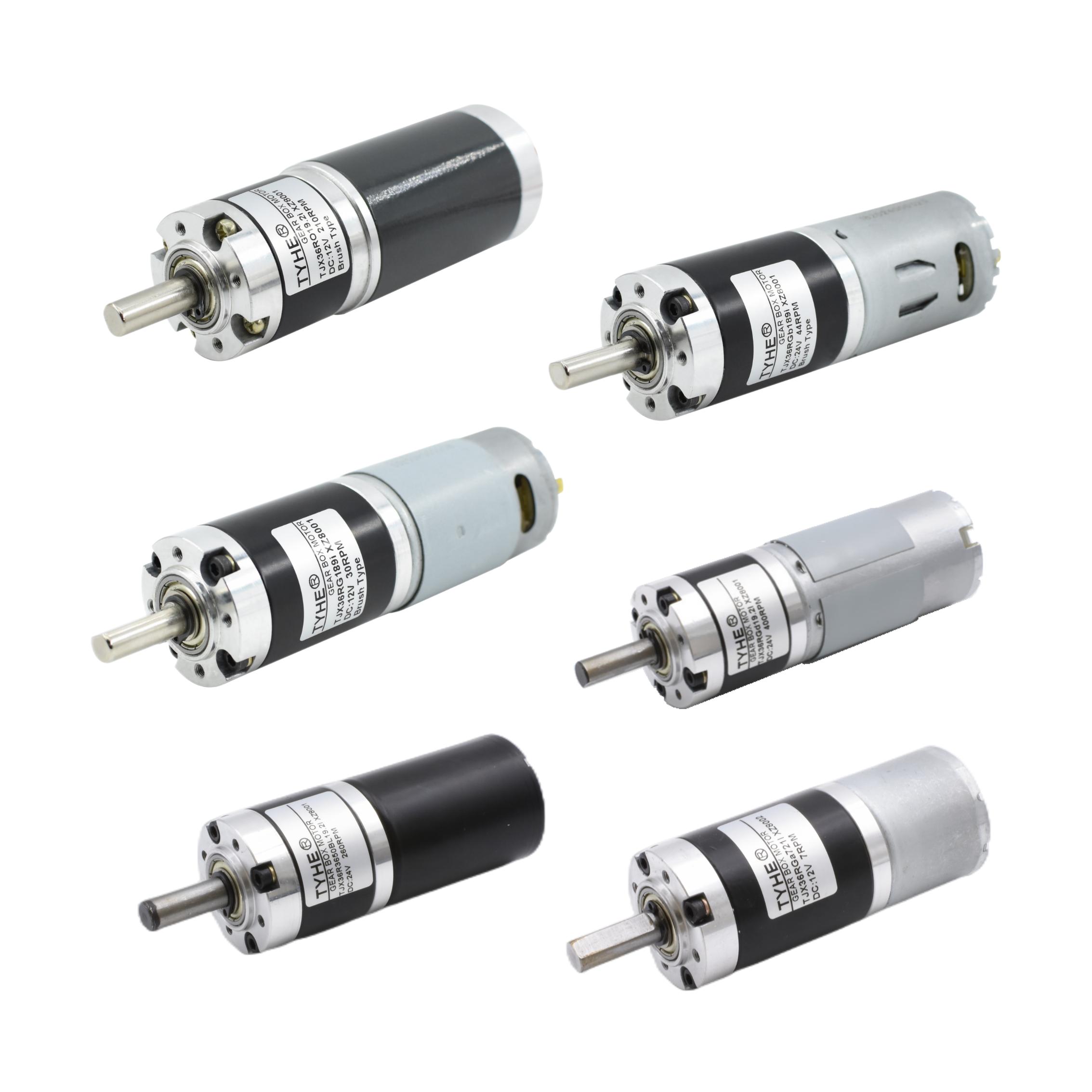
Backlash represents one of the most critical performance variables in modern mechanical drive systems, and its impact on a planetary gear motor cannot be overstated. When backlash—the small gap between meshing gear teeth—exceeds design tolerances, a planetary gear motor experiences reduced efficiency, increased vibration, compromised positioning accuracy, and accelerated wear patterns. Understanding how backlash affects your planetary gear motor is essential for engineers, maintenance teams, and procurement specialists who rely on precision motion control in automotive, robotics, aerospace, and industrial automation sectors.
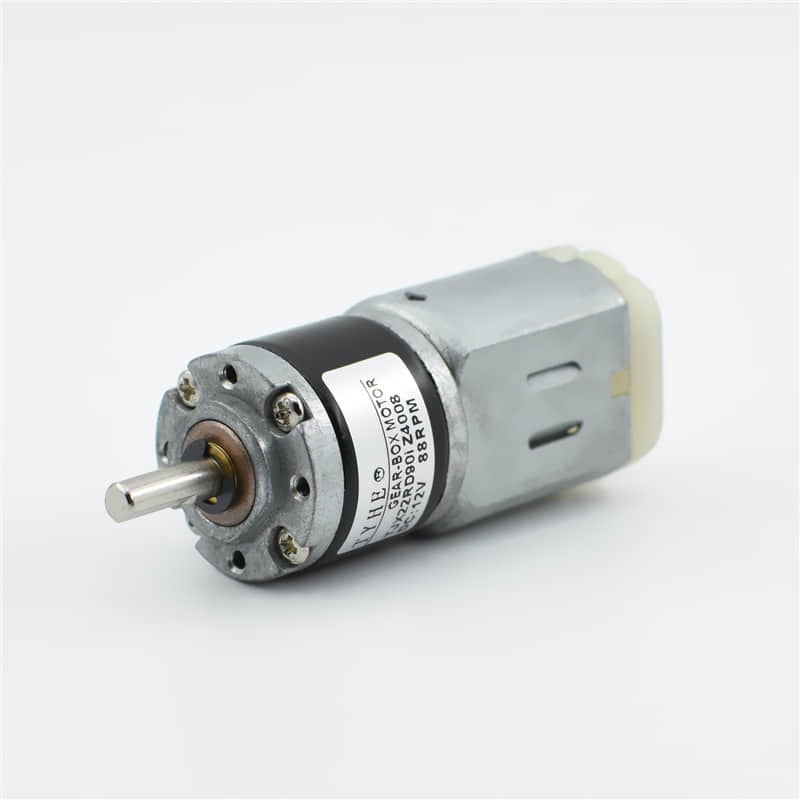
Every planetary gear motor operates within a tolerance envelope established during design and manufacturing. Backlash, when it exceeds this envelope, degrades the fundamental promise of precision gearing: smooth, predictable power transmission. This article explores how backlash manifests in a planetary gear motor, its measurable consequences, and proven strategies to mitigate its negative effects across diverse industrial applications.
Understanding Backlash in Planetary Gear Motor Systems
Definition and Origin of Backlash
Backlash in a planetary gear motor emerges from the intentional gaps designed between gear teeth to allow for lubrication, thermal expansion, and manufacturing tolerances. This backlash is necessary during assembly, yet excessive backlash transforms from a design feature into a performance liability. In a planetary gear motor, backlash occurs at multiple meshing points: between the sun gear and planetary gears, between the planetary gears and the ring gear, and in the carrier assembly. When load reversal occurs or directional change commands are issued, a planetary gear motor with excessive backlash exhibits a dead-band delay before responding to input torque, creating lag in motion control systems.
Measurement and Detection Methods
Technicians measure backlash in a planetary gear motor using precision dial indicators, laser-based rotational measurement systems, or acoustic emission analysis. A standard planetary gear motor under no-load conditions can be manually rotated until resistance appears, with the angular deviation recorded in degrees or arcminutes. High-precision applications require backlash testing across multiple load states because a planetary gear motor exhibits different backlash characteristics under static conditions versus dynamic operation. Modern diagnostic equipment can detect backlash degradation patterns before they cascade into catastrophic failures, enabling predictive maintenance strategies that extend planetary gear motor service life.
Performance Degradation from Excess Backlash
Efficiency Loss and Energy Waste
Excessive backlash in a planetary gear motor directly reduces mechanical efficiency by introducing slack periods during each rotational cycle. When input torque reverses or changes direction, a planetary gear motor must first take up the accumulated backlash before transmitting power smoothly, causing energy dissipation and heat generation. Typical efficiency losses from backlash range from 2 percent to 8 percent depending on operating frequency, load profile, and backlash magnitude. Industrial facilities operating thousands of planetary gear motor units continuously discover that even fractional efficiency improvements, achieved through backlash reduction, accumulate into substantial energy savings and lower operational costs over multi-year periods.
Precision Loss and Motion Control Errors
Robotic arms, machine tool spindles, and automated positioning systems depend on repeatable, accurate motion, yet a planetary gear motor with excessive backlash cannot deliver this performance guarantee. Each directional reversal introduces unpredictable angular deviation, accumulating positioning errors that compound across multi-axis movements. A planetary gear motor rated for 0.1-degree positioning accuracy becomes unreliable when backlash exceeds 0.05 degrees, rendering the system unsuitable for precision manufacturing, semiconductor assembly, or medical device applications. Designers often specify low-backlash or zero-backlash variants of a planetary gear motor when application requirements demand submicron repeatability or angular precision below one arcminute.
Vibration Amplification and Noise Generation
Backlash creates impulsive contact conditions in a planetary gear motor, causing gear teeth to collide abruptly when slack is suddenly taken up during load reversal. This generates audible noise, mechanical shock, and transmitted vibration through connected structures. Industries with noise-sensitive environments—such as pharmaceutical manufacturing, precision laboratories, and office automation—cannot tolerate the acoustic signature of a planetary gear motor operating with degraded backlash characteristics. Vibration-induced stresses also accelerate bearing wear, seal degradation, and structural fatigue, converting what appears as a small tolerance issue into a cascade of secondary failures throughout the drive system.
Control Strategies and Mitigation Approaches
Design-Phase Backlash Optimization
The most cost-effective backlash management occurs during initial planetary gear motor design rather than in field retrofit scenarios. Engineers specify tighter gear tooth tolerances, employ helical gear geometry instead of spur gears, and design carrier assemblies with preload features that continuously reduce backlash under normal operating conditions. A planetary gear motor manufactured with zero-backlash specifications requires premium materials, precision grinding, and controlled assembly techniques, increasing unit cost by 15 percent to 30 percent, yet justifying this expense when application requirements demand repeatable sub-micron motion or extended service life in critical infrastructure. Advanced design simulation tools now predict backlash evolution across a planetary gear motor lifecycle, enabling engineers to establish tolerance stacks that remain within acceptable ranges throughout normal operating life.
Manufacturing and Assembly Excellence
Quality control during manufacture of a planetary gear motor directly determines delivered backlash performance. Modern manufacturing facilities employ statistical process control, coordinate-measuring-machine inspection, and automated sorting to ensure every planetary gear motor component meets exacting specifications. Assembly procedures that include backlash verification at intermediate stages prevent downstream problems; a planetary gear motor that passes backlash inspection before final housing assembly will maintain consistent performance throughout its operational life. Preventive maintenance programs that include periodic backlash measurement enable operators to detect degradation trends and schedule replacement before a planetary gear motor fails catastrophically, reducing unplanned downtime and extending system reliability.
Operational Load Management
Controlling acceleration profiles, limiting reversals, and avoiding shock loads reduces the mechanical stress that amplifies backlash effects in a planetary gear motor. Modern servo controllers employ s-curve acceleration profiles and electronic backlash compensation algorithms that anticipate directional reversals and pre-torque the drive system to minimize slack-taking impact. Some advanced systems use dual-motor drive configurations where a planetary gear motor pair operates with pre-loaded tension, eliminating backlash entirely during operation. Operators trained to recognize backlash-inducing operating patterns—such as rapid load reversal cycles or emergency stopping conditions—can modify workflows to reduce mechanical stress, extending both planetary gear motor service life and overall system reliability.
FAQ
How does backlash in a planetary gear motor affect long-term reliability?
Backlash accelerates wear by creating impulsive gear tooth contact, compromises lubrication film formation, and promotes vibration-induced fatigue in bearings and housing structures. A planetary gear motor operating with excessive backlash experiences dramatically reduced service life, with typical failures occurring 30 percent to 50 percent earlier than design predictions. Predictive maintenance programs that monitor backlash trends can identify degradation patterns before catastrophic failure, enabling timely replacement and avoiding unexpected production losses.
What is the typical acceptable backlash range for a planetary gear motor?
Standard industrial-grade planetary gear motor designs typically specify backlash between 3 and 10 arcminutes, while precision variants operate below 1 arcminute, and zero-backlash models remain under 0.5 arcminutes. Application requirements determine acceptable ranges; a planetary gear motor in a conveyor system tolerates higher backlash than one in a precision robotic arm or semiconductor assembly equipment. Consultation with manufacturers and application engineers ensures a planetary gear motor is selected with appropriate backlash specifications matching your specific performance requirements.
Can backlash in a planetary gear motor be reduced after installation?
Field reduction of planetary gear motor backlash is technically possible through careful adjustment of gear mesh preload or shimming of bearing positions, yet such modifications carry risks of misalignment, accelerated wear, and potential damage. Most industrial applications require replacement with properly specified low-backlash or zero-backlash variants rather than attempting post-installation modifications. Consulting with the planetary gear motor manufacturer ensures appropriate remediation strategies that maintain system integrity while addressing performance deficiencies.
