
 EN
EN
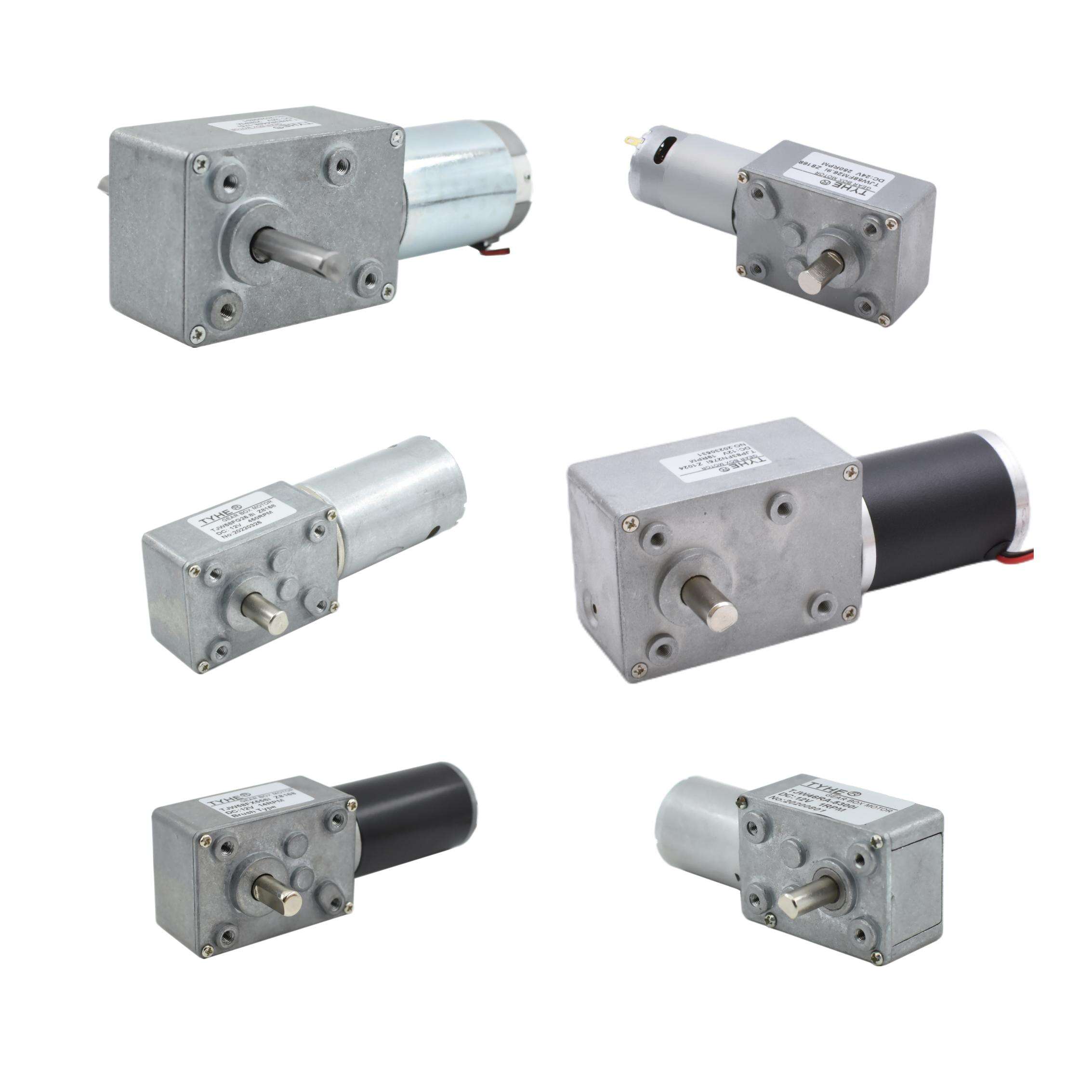
High-speed applications in industrial automation, robotics, medical devices, and aerospace demand precision, reliability, and optimal performance from every component. When selecting a dc motor for such demanding environments, engineers must evaluate multiple technical parameters, operational constraints, and application-specific requirements to ensure the chosen motor delivers sustained high-speed rotation without compromising efficiency or longevity. The decision process extends beyond simply identifying a motor with a high maximum speed rating; it requires careful consideration of thermal management, mechanical stability, commutation method, bearing design, and the interaction between electrical characteristics and load dynamics.
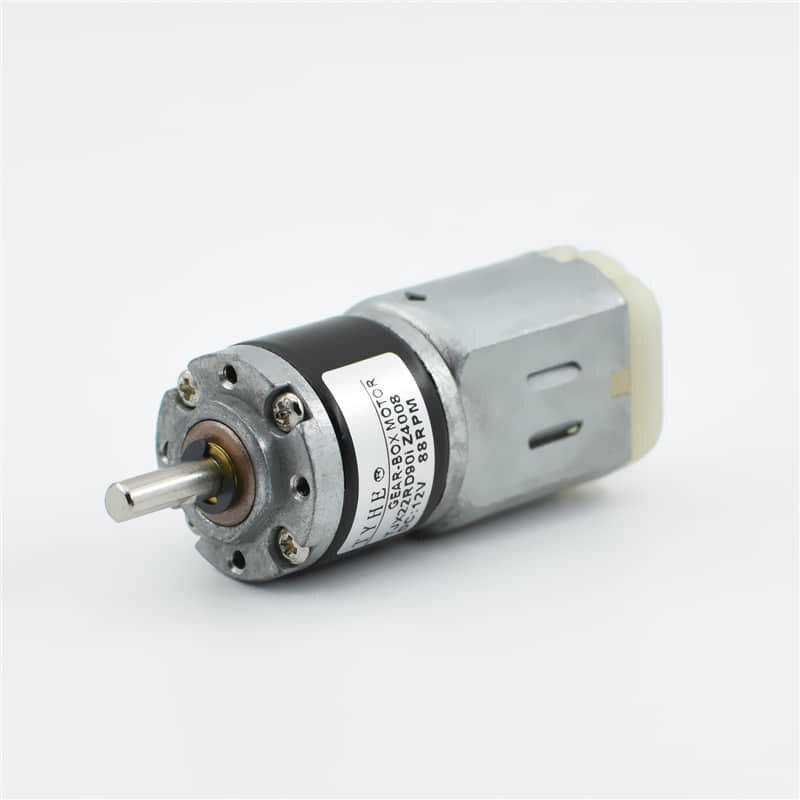
Understanding what constitutes a high-speed application is the first critical step. While the definition varies across industries, high-speed operation for a dc motor typically refers to rotational speeds exceeding 10,000 revolutions per minute, with some specialized applications requiring speeds well above 30,000 rpm. At these elevated speeds, traditional design assumptions break down, and factors like rotor balance, windage losses, bearing life, and electrical noise become dominant considerations. This article provides a structured approach to selecting the right dc motor for high-speed applications, examining the key technical criteria, design trade-offs, and practical considerations that determine success in demanding operational environments.
Understanding the Mechanical Limitations of High-Speed DC Motor Operation
Rotor Dynamics and Critical Speed Considerations
Every rotating mechanical system has natural frequencies at which vibration amplitudes increase dramatically. For a dc motor operating at high speeds, the rotor's critical speed represents a fundamental mechanical limit that must be carefully managed during the selection process. When a motor approaches its first critical speed, even minor imbalances in the rotor assembly can generate destructive vibrations that lead to bearing failure, shaft deflection, and catastrophic mechanical breakdown. High-speed dc motor designs must ensure that the operating speed range remains well below the first critical speed, typically maintaining a safety margin of at least thirty percent.
The rotor's mechanical design significantly influences critical speed behavior. Slender, long rotors with small diameters exhibit lower critical speeds compared to short, rigid designs. Manufacturers of high-speed dc motors often employ specialized rotor construction techniques, including precision balancing to ISO G2.5 or better standards, reinforced shaft materials with high stiffness-to-weight ratios, and optimized winding retention systems that prevent copper deformation under centrifugal loads. When selecting a dc motor for speeds exceeding 15,000 rpm, engineers should request detailed documentation of the rotor's dynamic characteristics, including calculated critical speeds and factory balance reports.
Bearing Selection and Lubrication Requirements
Bearing technology represents one of the most critical factors limiting dc motor performance in high-speed applications. Standard ball bearings experience dramatically reduced operational life at elevated speeds due to increased friction, heat generation, and lubricant breakdown. The relationship between bearing life and speed follows an inverse cubic law in many cases, meaning that doubling the operating speed can reduce bearing life by a factor of eight or more. High-speed dc motor designs typically incorporate precision angular contact bearings, hybrid ceramic bearings, or specialized high-speed bearing configurations that address these challenges through advanced materials and geometry.
Lubrication method becomes equally important in high-speed dc motor applications. Traditional grease lubrication often proves inadequate above 10,000 rpm due to churning losses, temperature rise, and lubricant degradation. Many high-speed dc motor designs employ oil mist lubrication, oil jet systems, or specialized high-speed greases formulated for extreme operating conditions. When evaluating a dc motor for high-speed use, engineers must verify that the bearing and lubrication system design explicitly supports the intended speed range, and they should obtain manufacturer specifications for expected bearing life under actual operating conditions, including thermal environment and duty cycle characteristics.
Windage Losses and Thermal Management Challenges
As dc motor speed increases, aerodynamic drag on the rotating components becomes a significant source of power loss and heat generation. Windage losses increase approximately with the cube of rotational speed, meaning that a dc motor operating at 20,000 rpm experiences eight times the windage losses of the same motor running at 10,000 rpm. These losses manifest as heat that must be dissipated through the motor housing, adding to the thermal load generated by resistive losses in the windings and iron losses in the magnetic circuit.
Effective thermal management becomes essential for sustained high-speed dc motor operation. Motors designed specifically for high-speed applications often feature enhanced cooling provisions, including finned housings with increased surface area, internal cooling fans or blowers, forced air cooling channels, or even liquid cooling jackets for the most demanding applications. When selecting a dc motor for high-speed use, engineers should carefully evaluate the thermal characteristics under expected operating conditions, including ambient temperature, duty cycle, and enclosure constraints. Temperature rise specifications should be verified against application requirements, and derating curves should be consulted to ensure the motor can deliver required torque continuously at maximum speed without exceeding thermal limits.
Electrical Characteristics and Commutation Methods for High-Speed Performance
Brushed Versus Brushless DC Motor Architectures
The fundamental choice between brushed and brushless dc motor architectures significantly impacts high-speed performance potential. Traditional brushed dc motor designs use mechanical commutation through carbon brushes contacting a rotating commutator. While this approach offers simplicity and cost advantages, it imposes practical speed limitations due to brush wear, commutator surface degradation, and electrical arcing at high switching frequencies. Most brushed dc motor designs encounter practical speed limits in the range of 10,000 to 15,000 rpm, although specialized high-speed brushed motors with advanced commutator materials and optimized brush geometry can reach higher speeds.
Brushless dc motor technology eliminates mechanical commutation entirely, using electronic switching to control current flow through the stator windings while the permanent magnet rotor rotates. This architecture fundamentally removes the wear mechanisms and electrical limitations associated with brushes and commutators, enabling much higher operating speeds with improved reliability. Brushless dc motors routinely operate at speeds exceeding 30,000 rpm, with some specialized designs reaching 100,000 rpm or higher. For applications requiring sustained operation above 15,000 rpm, brushless dc motor technology typically represents the optimal choice, offering superior speed capability, longer operational life, reduced maintenance requirements, and better efficiency across the speed range.
Winding Design and Inductance Considerations
The electrical time constant of a dc motor, determined primarily by winding inductance and resistance, fundamentally limits how quickly current can change in response to control inputs. At high speeds, the commutation frequency increases proportionally, requiring rapid current transitions to maintain proper torque production. High winding inductance slows these transitions, leading to incomplete commutation, increased electrical losses, and reduced torque capability at elevated speeds. High-speed dc motor designs typically employ low-inductance winding configurations, including fewer turns of heavier wire, distributed winding patterns, and optimized slot geometry.
The voltage constant and torque constant of a dc motor represent two sides of the same electromagnetic relationship, with the voltage constant determining the back EMF generated at a given speed. For high-speed operation, a dc motor must be designed with an appropriate voltage constant that allows the available supply voltage to overcome back EMF while still providing sufficient current for torque production at maximum speed. Engineers selecting a dc motor for high-speed applications should calculate the expected back EMF at maximum operating speed and verify that adequate voltage margin exists for torque control throughout the speed range. Winding configurations can be optimized through series-parallel arrangements or custom winding specifications to match voltage constant to application requirements.
Drive Electronics and Control System Requirements
The performance of a dc motor in high-speed applications depends as much on the drive electronics as on the motor itself. Brushless dc motor operation requires sophisticated electronic commutation, typically implemented through three-phase inverter circuits with precise timing control. At high speeds, the switching frequency of the drive electronics must increase proportionally, placing demanding requirements on power semiconductor devices, gate drive circuits, and control algorithms. Modern high-speed dc motor drives employ advanced control techniques including field-oriented control, sensorless commutation algorithms, and adaptive timing optimization to maintain efficient operation across the speed range.
When selecting a dc motor for high-speed applications, engineers must ensure that compatible drive electronics exist or can be designed to support the intended operating conditions. Key drive specifications to evaluate include maximum switching frequency capability, current control bandwidth, voltage rating with adequate margin above maximum back EMF, and thermal capacity for sustained high-speed operation. The control system should also provide appropriate protection features including overspeed detection, thermal monitoring, and fault management to ensure safe operation under all conditions. For critical applications, redundant sensing and control paths may be necessary to meet reliability requirements.
Application-Specific Performance Requirements and Selection Criteria
Torque-Speed Characteristics and Power Delivery
High-speed applications impose unique demands on dc motor torque-speed characteristics. Unlike constant-speed applications where the motor operates at a single design point, high-speed applications often require the dc motor to deliver specific torque profiles across a wide speed range. Some applications need maximum torque at high speeds for direct drive of high-speed tools or spindles, while others require high torque at low speeds for acceleration, with reduced torque acceptable at maximum speed. Understanding the complete torque-speed envelope required by the application is essential for proper dc motor selection.
The power rating of a dc motor increases linearly with speed when torque remains constant, but mechanical and thermal limitations typically force torque reduction at elevated speeds. Most dc motor manufacturers provide torque-speed curves that show continuous and intermittent operating regions, with different thermal limits applying based on duty cycle and cooling conditions. Engineers must map application requirements onto these characteristic curves, ensuring that all operating points fall within acceptable regions with appropriate safety margins. Peak torque requirements for acceleration or short-duration overload conditions should be verified against the motor's intermittent rating, while sustained operation points must remain within continuous thermal limits.
Inertia Matching and Dynamic Response
The rotational inertia of a dc motor rotor significantly affects dynamic performance in high-speed applications, particularly those requiring rapid acceleration, precise speed control, or frequent speed changes. Low rotor inertia enables faster acceleration and deceleration, reducing the energy required for speed transitions and improving control system response. High-speed dc motor designs typically minimize rotor inertia through lightweight construction, hollow rotor geometries where applicable, and optimized magnetic materials that reduce required rotor volume for a given torque capability.
The concept of inertia matching becomes important when the dc motor drives a mechanical load through a coupling or transmission. Optimal dynamic performance generally occurs when the reflected load inertia falls within a specific ratio range relative to motor rotor inertia, typically between one-to-one and ten-to-one depending on application requirements. For high-speed applications with low-inertia loads such as small fans, blowers, or direct-drive tools, selecting a dc motor with appropriately low rotor inertia becomes critical for achieving desired acceleration performance and control bandwidth. Motor specifications should clearly state rotor inertia values to enable proper matching and dynamic analysis.
Environmental and Reliability Requirements
High-speed dc motor applications span diverse environmental conditions, from clean-room medical devices to harsh industrial settings with temperature extremes, contamination, and vibration. The motor enclosure rating, materials of construction, and sealing provisions must match environmental exposure throughout the application's operational life. Standard IP ratings define protection against dust and moisture ingress, but high-speed applications may impose additional requirements including chemical resistance, high-temperature capability, or specialized contamination barriers.
Reliability requirements vary dramatically across applications, with some accepting periodic maintenance and replacement while others demand maintenance-free operation for years or decades. For critical applications, mean time between failures must be calculated based on bearing life, winding insulation aging, and other failure mechanisms under actual operating conditions. High-speed dc motor selection should incorporate formal reliability analysis, including identification of single-point failure modes and evaluation of design features that enhance operational life. Redundant sensing, fault-tolerant control, and condition monitoring capabilities may justify premium motor selections in applications where downtime carries high cost or safety implications.
Integration Considerations and System-Level Optimization
Mechanical Interface and Mounting Requirements
The mechanical integration of a high-speed dc motor into the application system requires careful attention to mounting provisions, shaft coupling methods, and structural dynamics. High-speed operation amplifies the consequences of misalignment, inadequate mounting stiffness, or improper coupling selection, potentially leading to vibration, bearing overload, and premature failure. The motor mounting surface must provide sufficient stiffness to resist vibration and maintain alignment under all operating conditions, with mounting bolt torque specifications followed precisely to ensure proper load distribution.
Shaft coupling selection becomes particularly important in high-speed dc motor applications. Rigid couplings demand precise alignment and offer no protection against misalignment-induced bearing loads. Flexible couplings accommodate small misalignments but introduce additional compliance that can affect control system dynamics and potentially excite torsional resonances. High-speed applications often employ specialized coupling designs including diaphragm couplings, disk couplings, or elastomeric couplings with high torsional stiffness and low inertia. The coupling selection must consider not only static alignment capability but also dynamic characteristics including balance quality, critical speed, and torsional natural frequencies that could interact with motor control dynamics.
Electrical Installation and EMI Management
High-speed dc motor operation, particularly with brushless motors and high-frequency drive electronics, generates significant electromagnetic interference that can affect nearby electronic systems. Proper electrical installation practices become essential for reliable operation and regulatory compliance. Motor power cables should be sized appropriately for continuous current with adequate voltage drop margin, and shielded cable construction may be necessary to contain radiated emissions. Grounding practices must ensure that motor frame, drive electronics, and control system share a common ground reference while avoiding ground loops that could conduct high-frequency noise.
Drive electronics placement relative to the dc motor affects both electrical noise and system cost. Long motor cable runs introduce additional capacitance and inductance that can degrade high-frequency control performance and increase electromagnetic emissions. Many high-speed dc motor systems benefit from locating drive electronics close to the motor, minimizing cable length while accepting the need for longer, lower-frequency control signal connections. Filtering components including line filters on the drive input and common-mode chokes on motor output cables help contain emissions while maintaining control performance. Engineers should verify that the complete system, including dc motor, drive, and installation practice, meets applicable electromagnetic compatibility standards for the intended operating environment.
Thermal Integration and Cooling System Design
The thermal performance of a high-speed dc motor depends not only on internal design but also on integration with the surrounding system. Heat generated within the motor must be transferred through the motor housing to the mounting structure or ambient environment, with the thermal resistance of each interface affecting ultimate temperature rise. Motors mounted to thermally conductive structures benefit from improved heat sinking compared to motors mounted in thermally isolated enclosures or on insulating materials. Some applications require active cooling provisions including forced air flow, liquid cooling loops, or thermoelectric cooling to maintain acceptable operating temperatures.
When selecting a dc motor for high-speed applications, engineers should model the complete thermal circuit from internal heat sources through all interfaces to final heat rejection. Temperature rise specifications provided by motor manufacturers typically assume specific mounting and cooling conditions that may not match application reality. Conservative thermal analysis should account for worst-case ambient temperatures, altitude effects on air cooling effectiveness, and potential degradation of thermal interfaces over time. Thermal monitoring through embedded sensors provides valuable feedback for condition-based maintenance and enables control system protection against overtemperature conditions that could damage windings or degrade permanent magnets in brushless dc motor designs.
FAQ
What maximum speed can a dc motor reliably achieve in continuous operation?
The maximum reliable continuous speed for a dc motor depends primarily on the motor architecture and design optimization. Brushed dc motors with conventional commutator construction typically operate reliably up to 10,000 to 15,000 rpm, with specialized designs reaching 20,000 rpm. Brushless dc motors eliminate mechanical commutation limitations and routinely achieve continuous speeds of 30,000 to 50,000 rpm, with highly specialized designs for applications like dental tools or precision spindles reaching 100,000 rpm or higher. The practical speed limit depends on rotor mechanical design, bearing technology, thermal management provisions, and drive electronics capability. When evaluating a dc motor for high-speed applications, engineers should verify that the manufacturer's speed rating applies to continuous operation under expected environmental conditions rather than short-duration testing.
How does high-speed operation affect dc motor efficiency and power consumption?
High-speed dc motor operation introduces several efficiency challenges that affect overall power consumption. Windage losses increase with the cube of speed, creating significant aerodynamic drag that converts electrical power to heat without producing useful torque. Iron losses in the magnetic circuit also increase at higher speeds due to elevated flux reversal rates. These speed-dependent losses add to the resistive copper losses that dominate at low speeds, creating an efficiency curve that typically peaks at moderate speeds and declines at very high speeds. However, brushless dc motor technology often maintains better efficiency at high speeds compared to brushed motors due to the elimination of brush friction and electrical losses. When selecting a dc motor for high-speed applications, engineers should request efficiency curves across the operating speed range and calculate energy consumption based on actual duty cycles rather than peak efficiency specifications.
What maintenance considerations apply to high-speed dc motor applications?
Maintenance requirements for high-speed dc motors vary dramatically based on motor architecture and operating conditions. Brushed dc motors require periodic brush inspection and replacement, with wear rates accelerating at higher speeds due to increased mechanical contact frequency and electrical arcing. Bearing lubrication must be monitored and maintained according to manufacturer specifications, with more frequent service intervals typically required for high-speed operation. Brushless dc motors eliminate brush maintenance entirely, focusing maintenance attention on bearings, cooling system cleanliness, and electrical connection integrity. High-speed applications benefit from condition monitoring systems that track vibration signatures, bearing temperature, and electrical parameters to detect developing problems before catastrophic failure occurs. Predictive maintenance approaches based on sensor data can significantly extend operational life and reduce unplanned downtime compared to fixed-interval maintenance schedules.
Can standard industrial dc motors be operated at higher speeds than their ratings?
Operating a dc motor above its rated speed involves significant risks and should only be attempted with thorough engineering analysis and manufacturer consultation. The rated speed specification reflects design limits for mechanical strength, bearing life, thermal capacity, and electrical characteristics. Exceeding rated speed increases centrifugal forces on the rotor, accelerates bearing wear, increases windage and iron losses, and may exceed the critical speed where destructive vibrations occur. Some dc motor designs incorporate safety margins that allow limited overspeed operation, but this should never be assumed without explicit manufacturer documentation. Applications requiring speeds above standard ratings should specify custom motor designs optimized for the intended operating conditions, ensuring that all mechanical, thermal, and electrical characteristics support reliable high-speed operation rather than attempting to push standard motors beyond their design envelope.
Table of Contents
- Understanding the Mechanical Limitations of High-Speed DC Motor Operation
- Electrical Characteristics and Commutation Methods for High-Speed Performance
- Application-Specific Performance Requirements and Selection Criteria
- Integration Considerations and System-Level Optimization
-
FAQ
- What maximum speed can a dc motor reliably achieve in continuous operation?
- How does high-speed operation affect dc motor efficiency and power consumption?
- What maintenance considerations apply to high-speed dc motor applications?
- Can standard industrial dc motors be operated at higher speeds than their ratings?
