
 EN
EN
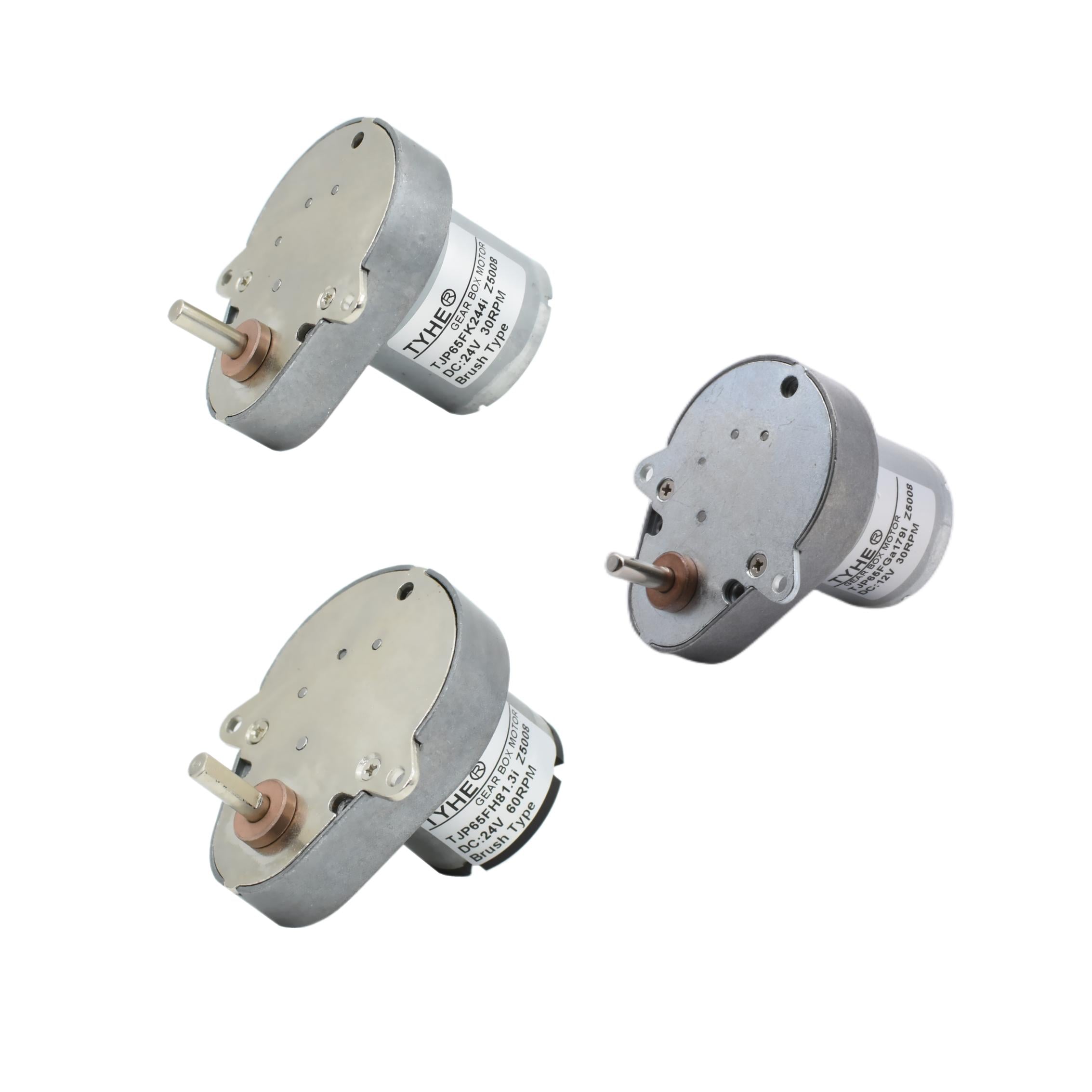
The 24V DC motor has become an essential component in modern CNC machine design, providing the precision and reliability required for high-performance manufacturing operations. As industries demand greater accuracy and faster production cycles, the 24V DC motor continues to prove its value as a trusted solution for driving spindles, feed mechanisms, and auxiliary systems in CNC environments. Understanding the role of the 24V DC motor in contemporary CNC machinery is critical for manufacturers seeking to optimize their equipment performance and maintain competitive advantage in precision machining.
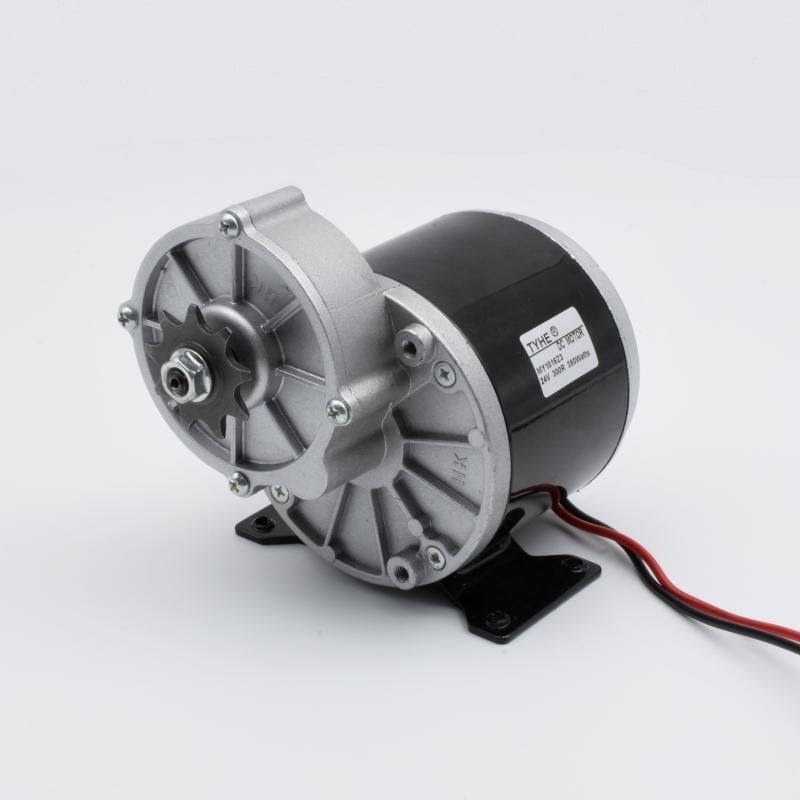
CNC machines rely on consistent torque delivery, smooth acceleration, and precise speed control to achieve tolerances measured in micrometers. The 24V DC motor delivers these characteristics through straightforward electrical control and responsive speed regulation, making it the preferred choice across diverse CNC applications from small precision mills to large industrial machining centers. This article explores how the 24V DC motor integrates into modern CNC systems and why its role continues to expand as manufacturing standards become increasingly demanding.
The Fundamentals of 24V DC Motor Operation in CNC Systems
How 24V DC Motors Provide Precision Control
The 24V DC motor excels in CNC applications because its speed and torque can be modulated with exceptional precision through simple voltage and current adjustments. Unlike AC motors that require complex frequency drives, the 24V DC motor responds immediately to control signals, enabling real-time adjustments to feed rates, spindle speeds, and positioning accuracy. This direct relationship between electrical input and mechanical output makes the 24V DC motor ideally suited for computer-controlled manufacturing environments where millisecond-level timing and micron-level positioning matter.
CNC machine controllers continuously send feedback signals to regulate 24V DC motor performance, ensuring that cutting tools maintain exact depth, speed, and feed rate throughout complex machining cycles. The 24V DC motor's inherent characteristics support this closed-loop control without requiring additional stabilization hardware. Manufacturers can achieve repeatable precision because the 24V DC motor delivers consistent torque curves and predictable performance across thousands of operating hours, reducing tool wear and material waste.
Electrical Efficiency and System Integration
Operating at 24 volts provides a safety advantage in industrial environments while maintaining sufficient power delivery for demanding CNC operations. The 24V DC motor draws moderate current compared to higher-voltage alternatives, reducing heat generation and extending motor life. This efficiency translates to lower cooling requirements, decreased energy consumption, and reduced operational costs, making the 24V DC motor an economically sound choice for manufacturers operating multiple CNC machines.
Integration of the 24V DC motor into existing CNC architectures is straightforward because 24-volt systems are standard throughout the manufacturing industry. Control circuits, power supplies, and monitoring equipment designed around 24V standards work seamlessly with the 24V DC motor, simplifying maintenance, troubleshooting, and system upgrades. Technicians trained on one 24V DC motor installation can transfer their expertise across different machine tools and brands, reducing training costs and minimizing downtime during transitions.
Critical Applications of 24V DC Motor in Modern CNC Machinery
Spindle Drive and Cutting Tool Management
The 24V DC motor drives spindle systems that rotate cutting tools at speeds ranging from hundreds to tens of thousands of RPM depending on the machining application. For precision boring, milling, and drilling operations, the 24V DC motor maintains spindle speed stability even as cutting forces fluctuate during tool engagement and retraction. Advanced CNC controllers monitor spindle load and automatically adjust the 24V DC motor's electrical parameters to maintain constant surface speed, a feature essential for producing consistent surface finishes on multiple workpieces.
Tool changers and automatic tool positioning systems also depend on the 24V DC motor for reliable, repeatable performance. A single CNC program may specify dozens of tool changes throughout a production run, and each transition demands precise positioning of the 24V DC motor to ensure tools seat correctly and spindle alignment remains true. The 24V DC motor's rapid response characteristics and high repeatability make it the natural choice for these mission-critical applications where tool misalignment can damage expensive cutting tools and ruin finished workpieces.
Feed Mechanisms and Dimensional Accuracy
XY and Z-axis feed mechanisms in CNC machines require the 24V DC motor to translate smooth, controllable rotational motion into precise linear movement measured in thousandths of an inch or hundredths of millimeters. Lead screws and ball screws coupled to 24V DC motor systems move machine tables and tool heads with exactitude that mechanical systems alone cannot achieve. The 24V DC motor's variable speed capability allows CNC controllers to rapid-traverse axes at high speed when no cutting occurs, then reduce the 24V DC motor's speed during actual machining to optimize surface finish and tool life.
Backlash compensation and thermal growth correction algorithms in modern CNC controllers rely on the predictable response of the 24V DC motor to fine-tune positioning and maintain tolerances throughout production runs. As ambient temperature rises or the machine warms during extended operation, CNC software automatically adjusts the 24V DC motor's command signals to compensate for thermal expansion in mechanical components. This sophisticated feedback loop would be impossible without the 24V DC motor's direct electrical controllability and responsive torque delivery.
Auxiliary Systems and Production Efficiency
Beyond primary cutting functions, the 24V DC motor powers numerous auxiliary systems that enhance CNC machine productivity and operator safety. Coolant pumps driven by 24V DC motor units deliver cutting fluid precisely when needed, reducing tool wear and improving surface finish quality. Chip conveyors equipped with 24V DC motor drives continuously clear swarf from the machining area, preventing tool breakage and maintaining visibility for operators monitoring the cutting process.
Automatic workpiece positioning systems, part clamps, and material handling devices throughout modern CNC installations rely on 24V DC motor solutions to automate repetitive tasks and minimize human intervention. The integration of multiple 24V DC motor applications into a single CNC machine demonstrates how this fundamental component contributes to overall production efficiency and worker safety. Manufacturers who maximize the use of 24V DC motor-driven automation reduce per-unit production costs and improve workforce utilization by freeing operators to manage multiple machines simultaneously.
Performance Advantages and Industry Context
Reliability and Maintenance Simplicity
The 24V DC motor design, perfected over decades of industrial use, represents a proven technology with extensive field history and established maintenance protocols. Technicians worldwide understand 24V DC motor troubleshooting procedures, and replacement motors are readily available from multiple suppliers, ensuring minimal production interruptions. Unlike emerging motor technologies that may lack spare parts availability or qualified service personnel, the 24V DC motor offers manufacturers confidence that support will remain accessible throughout the machine's operational lifetime.
Preventive maintenance schedules for 24V DC motor systems are well-established and straightforward, typically involving brush inspection, bearing lubrication, and visual checks for heat damage or contamination. The 24V DC motor's modular construction allows technicians to replace worn brushes or bearings without specialized equipment, keeping downtime brief and repair costs manageable. This ease of maintenance makes the 24V DC motor attractive for manufacturing facilities operating around-the-clock production schedules where equipment reliability directly impacts revenue and customer satisfaction.
Scalability Across Machine Classes and Industries
Whether applied in compact tabletop machining centers or massive multi-axis production mills, the 24V DC motor scales effectively across diverse CNC platforms. Desktop model hobbyist machines often incorporate single 24V DC motor units for spindle and feed functions, while industrial production facilities employ multiple 24V DC motor systems within each machine and across entire manufacturing cells. This scalability reflects the fundamental soundness of 24V DC motor technology and its adaptability to requirements ranging from prototype development to high-volume component manufacturing.
Industries including aerospace, automotive, medical device manufacturing, and precision electronics all depend on 24V DC motor technology within their CNC infrastructure. The aerospace sector demands exceptional reliability and traceability, standards the 24V DC motor meets through rigorous quality control and documented performance. Automotive suppliers operating to just-in-time production schedules rely on the 24V DC motor's consistency to maintain throughput and minimize waste. Medical device manufacturers trust the 24V DC motor to help achieve the micron-level tolerances their products demand, demonstrating the technology's versatility across quality-critical industries.
FAQ
Why is the 24V DC motor preferred over other motor types in CNC applications?
The 24V DC motor provides direct speed and torque control through simple electrical signals, enabling the precise regulation that CNC machines require. Unlike AC motors needing frequency drives or stepper motors with limited torque, the 24V DC motor delivers smooth, responsive performance at any speed within its range. Its proven reliability, wide availability, and straightforward integration into existing 24-volt industrial control systems make the 24V DC motor the standard choice for precision manufacturing equipment.
How does a 24V DC motor maintain cutting precision over extended production runs?
Modern CNC controllers continuously monitor 24V DC motor performance through speed and load sensors, adjusting electrical parameters in real-time to compensate for temperature changes, bearing wear, and load variations. The 24V DC motor's predictable torque characteristics allow software algorithms to maintain exact spindle speed and feed rate throughout production cycles lasting hours or days. This closed-loop feedback system, combined with the 24V DC motor's inherent stability, enables manufacturers to produce thousands of identical parts with tolerances measured in micrometers.
What maintenance requirements does a 24V DC motor in a CNC machine typically demand?
Routine maintenance for a 24V DC motor includes periodic brush inspection, bearing lubrication according to manufacturer specifications, and cleaning to prevent dust accumulation. Most industrial 24V DC motor systems operate reliably for thousands of hours with minimal intervention, and preventive maintenance schedules are well-established across the manufacturing industry. When wear occurs, technicians can replace worn components quickly without removing the entire motor, minimizing downtime and maintaining production schedules.
