
 EN
EN
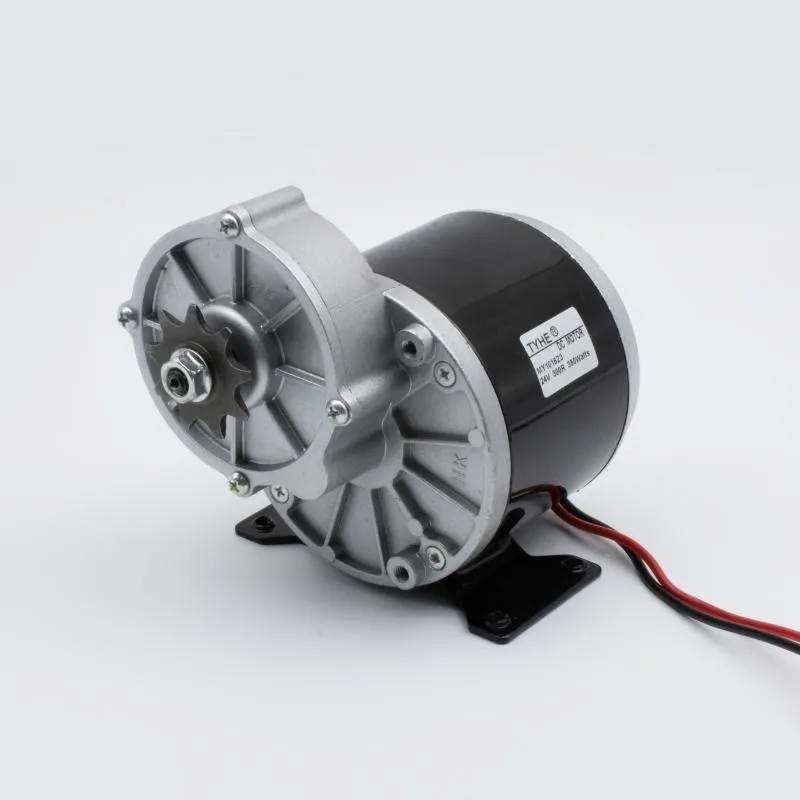
Introduction
When it comes to powering industrial equipment, automation systems, or heavy-duty applications, 24V DC motors stand out as a popular choice due to their optimal balance of power, efficiency, and safety. However, selecting the right motor requires a thorough understanding of its key features to ensure it meets your specific needs. Whether you're an engineer, a hobbyist, or a procurement specialist, this guide will walk you through the critical aspects to consider when purchasing a 24V DC motor. By the end of this article, you'll be equipped with the knowledge to make an informed decision, maximizing performance and longevity while minimizing costs.
1. Voltage and Power Requirements
The first step in selecting a 24V DC motor is to ensure it aligns with your power supply capabilities. While the voltage is fixed at 24V, the power output (measured in watts) depends on the motor’s current draw and efficiency.
Power Calculation: Use the formula (Power = Voltage × Current) to determine if the motor meets your application’s power demands. For instance, a motor drawing 5A at 24V delivers 120W of power.
Compatibility: Verify that your power supply can handle the motor’s starting current, which is often 2-3 times higher than the rated current. Undersized power supplies can lead to voltage drops, reduced performance, or even motor failure.
2. Motor Type: Brushed vs. Brushless
The choice between brushed and brushless motors significantly impacts performance, maintenance, and cost. Here’s a detailed comparison:
Brushed DC Motors
How They Work: Brushed motors use physical brushes and a commutator to deliver current to the rotor windings, generating motion through electromagnetic induction.
-
Advantages:
Simple control circuitry, making them cost-effective.
High startup torque, ideal for applications like conveyor belts or winches.
Easy speed control via voltage regulation.
-
Disadvantages:
Limited lifespan due to brush wear.
Require regular maintenance, including brush replacement.
Generate electromagnetic interference (EMI).
Best For: Applications where cost is a primary concern, and maintenance can be performed regularly.
Brushless DC Motors (BLDC)
How They Work: BLDC motors use electronic controllers to switch current through stator windings, eliminating the need for physical brushes.
-
Advantages:
Longer lifespan and higher reliability.
Greater efficiency (85-90% compared to 75-80% for brushed motors).
Quieter operation and less EMI.
-
Disadvantages:
Higher initial cost due to complex control systems.
Require specialized controllers (ESCs) for operation.
Best For: High-performance applications such as robotics, CNC machines, or HVAC systems where efficiency and durability are critical.
3. Speed and Torque Characteristics
Understanding the relationship between speed (RPM) and torque is crucial for matching the motor to your application.
No-Load Speed: The maximum RPM the motor can achieve when no load is applied. This value helps you understand the motor’s upper-speed limit.
Stall Torque: The torque produced when the motor is forced to stop. This is critical for applications requiring high starting torque, such as lifting mechanisms.
Rated Speed and Torque: The optimal operating point where the motor can run continuously without overheating. Operating outside this range may reduce efficiency or cause damage.
Performance Curves: Always review the motor’s speed-torque and efficiency-torque curves. The ideal operating point is typically where efficiency peaks, often around 70-85% of the stall torque.
4. Efficiency and Thermal Management
Efficiency directly impacts energy consumption, heat generation, and operational costs. Key factors include:
Motor Efficiency: Look for motors with efficiency ratings of 80% or higher. Brushless motors generally outperform brushed motors in this regard.
Thermal Protection: Motors with built-in thermal cutoffs or sensors prevent overheating, which is especially important in continuous-duty applications.
Cooling Mechanisms: Some motors feature forced-air cooling fans or heat sinks to dissipate heat. Ensure your motor’s cooling method aligns with your operating environment.
5. Physical Size and Mounting Options
The motor’s form factor should integrate seamlessly into your system. Consider the following:
Frame Size: Standardized dimensions (e.g., NEMA standards) ensure compatibility with existing systems.
Mounting Configuration: Common options include foot mounts, flange mounts, or face mounts. Choose one that aligns with your mechanical setup.
Weight and Material: Lightweight motors are preferable for portable devices, while robust, corrosion-resistant materials (e.g., aluminum enclosures) suit harsh environments.
6. Environmental and Operational Requirements
The operating environment plays a significant role in motor selection. Key considerations include:
-
IP Rating: The Ingress Protection (IP) rating indicates the motor’s resistance to dust and moisture. For example:
IP54: Protected against dust and water splashes.
IP67: Dust-tight and submersible in water up to 1 meter.
Temperature Range: Ensure the motor can operate within your environment’s temperature limits. Industrial motors often handle -40°C to 100°C.
Noise Levels: Brushless motors are quieter, making them suitable for noise-sensitive applications like medical devices or office equipment.
7. Control and Feedback Systems
Precise control over speed, position, or torque often requires additional components:
Encoders: Provide feedback on rotor position, enabling precise control in applications like robotics or CNC machines.
Gearboxes: Reduce speed and increase torque. Planetary gearboxes are known for high efficiency and compact size.
Motor Controllers: Brushed motors can use simple PWM controllers, while brushless motors require ESCs with advanced programming capabilities.
8. Lifespan and Maintenance Needs
The motor’s lifespan depends on its type, operating conditions, and maintenance:
Brushed Motors: Typically last 1,000-3,000 hours due to brush wear. Regular inspection and brush replacement are necessary.
Brushless Motors: Can exceed 10,000 hours with minimal maintenance, as they have no brushes to replace.
Bearing Life: Motors with sealed or lubricated bearings offer longer service intervals, reducing downtime.
9. Cost and Value Analysis
While upfront cost is important, consider the total cost of ownership:
Initial Cost: Brushed motors are cheaper to purchase but may incur higher maintenance costs.
Operational Cost: Brushless motors save energy and reduce downtime, offering better long-term value.
Warranty and Support: Choose manufacturers that provide comprehensive warranties and technical support.
10. Real-World Applications
To put these features into perspective, here are some common use cases for 24V DC motors:
Industrial Automation: Conveyor systems and robotic arms benefit from the high torque and reliability of brushless motors.
Renewable Energy: Solar trackers and wind turbine pitch systems use 24V DC motors for their efficiency and compatibility with battery storage.
Automotive Systems: Electric vehicle components like cooling fans and power windows often rely on 24V DC motors for their balance of power and safety.
Conclusion
Selecting the right 24V DC motor involves careful consideration of multiple factors, from voltage compatibility and motor type to environmental resilience and control systems. By prioritizing your application’s specific needs—whether it’s high torque, long lifespan, or precise control—you can choose a motor that delivers optimal performance and reliability. Always consult the motor’s datasheet and, if possible, test it under real-world conditions to ensure it meets your expectations. With the right knowledge and approach, your investment in a 24V DC motor will pay dividends in efficiency, durability, and overall success.
