
 EN
EN
Selecting the ideal 12V DC motor for your project can be a daunting task with numerous technical specifications to consider. Whether you're building an automated robot, a custom car accessory, or a smart home device, choosing incorrectly can lead to performance issues, reduced lifespan, or even project failure. This comprehensive guide will walk you through the critical steps of how to choose the right 12V DC motor, breaking down complex parameters into a clear, actionable decision-making framework. By the end of this article, you'll be able to confidently select a motor that perfectly balances power, size, efficiency, and cost for your specific needs.
Understanding Your Core Requirements
Before diving into motor catalogs, you must first define your project's core requirements. This foundational step directly influences every subsequent choice.
Speed (RPM): Do you need high rotational speed for a fan or a drill, or lower speed for a conveyor? Determine your required output shaft speed in Revolutions Per Minute (RPM).
Torque (Load): This is the motor's rotational force. Calculate the torque needed to move your load. Consider startup torque (which is often higher) and running torque. A motor with insufficient torque will stall.
Voltage & Power: A 12V DC motor is specified because it's compatible with batteries, solar panels, or AC/DC adapters. Ensure your power supply can deliver the required current (Amps) without voltage drop.
Physical Size and Mounting: The motor must physically fit into your design. Note the dimensional constraints and preferred mounting style (e.g., screw holes, bracket, or flange).
Key Technical Specifications to Decode
Once you know your needs, it's time to understand the language of motor datasheets.
No-Load Speed & Stall Torque: These two values define the motor's performance envelope. No-load speed is the maximum RPM with zero load, while stall torque is the torque produced when the shaft is prevented from rotating.
Rated Torque and Rated Speed: This is the optimal continuous operating point where the motor can run without overheating. It's the most important parameter for sustained performance.
-
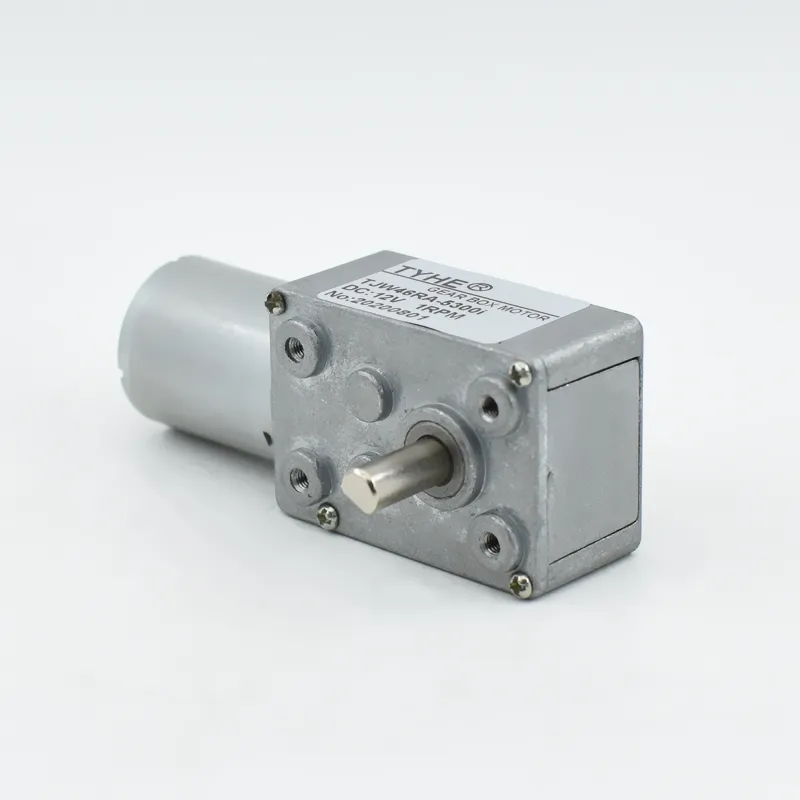
Gearbox: When and Why? If your project requires high torque at low speeds, a DC Gear Motor is essential. The gearbox reduces speed and multiplies torque.
Planetary vs. Spur Gears: For higher efficiency, compact size, and greater torque density, a Planetary Gear Motor is often the superior choice.
-
Motor Type: Brushed vs. Brushless
Brushed DC Motors: Cost-effective, simple control, and a great choice for most basic projects. However, they have a shorter lifespan due to brush wear.
Brushless DC (BLDC) Motors: More efficient, longer lifespan, higher speed capability, and quieter operation. They are ideal for high-performance or continuous-use applications but require a more complex electronic controller.
A Step-by-Step Selection Framework
Follow this practical workflow to narrow down your options:
Define Operating Point: Start with your required Rated Torque and Rated Speed.
Calculate Power: Power (Watts) ≈ Torque (Nm) x Speed (RPM) / 9.5488. This helps verify if a motor is in the right ballpark.
Check the Performance Curve: A good datasheet will provide a graph of Speed vs. Torque and Efficiency vs. Torque. Ensure your operating point is in the motor's high-efficiency region (often 70-85% of its stall torque).
Consider the Environment: Will the motor be exposed to moisture, dust, or extreme temperatures? Look for motors with appropriate IP (Ingress Protection) ratings.
Factor in Control Needs: Do you need to vary the speed? Brushed motors are easily controlled by varying voltage, while BLDC motors require a specialized ESC (Electronic Speed Controller).
Real-World Application Examples
-
Example 1: Robotic Arm Joint
Need: High holding torque, compact size, precise movement.
Choice: A low-profile 12V Planetary Gear Motor with a high-ratio gearbox provides the necessary torque in a small package.
-
Example 2: Portable Cooling Fan
Need: High RPM, low noise, long battery life.
Choice: A 12V Brushless DC Motor offers high efficiency and quiet operation, extending battery runtime.
-
Example 3: Car Window Lifter
Need: Moderate torque, reliability, cost-effectiveness.
Choice: A standard 12V Brushed DC Gear Motor is perfectly suited for this intermittent-duty, high-reliability application.
Conclusion and Next Steps
Choosing the right 12V DC motor is a systematic process of matching your project's technical and physical requirements with the motor's performance characteristics. By carefully considering speed, torque, the need for a gearbox, and the trade-offs between brushed and brushless types, you can ensure the success and durability of your project.
For more detailed information about motor applications and performance factors, you can explore our related articles on motor selection and maintenance. Our technical team is always ready to provide professional support for your specific project requirements.
