
 EN
EN
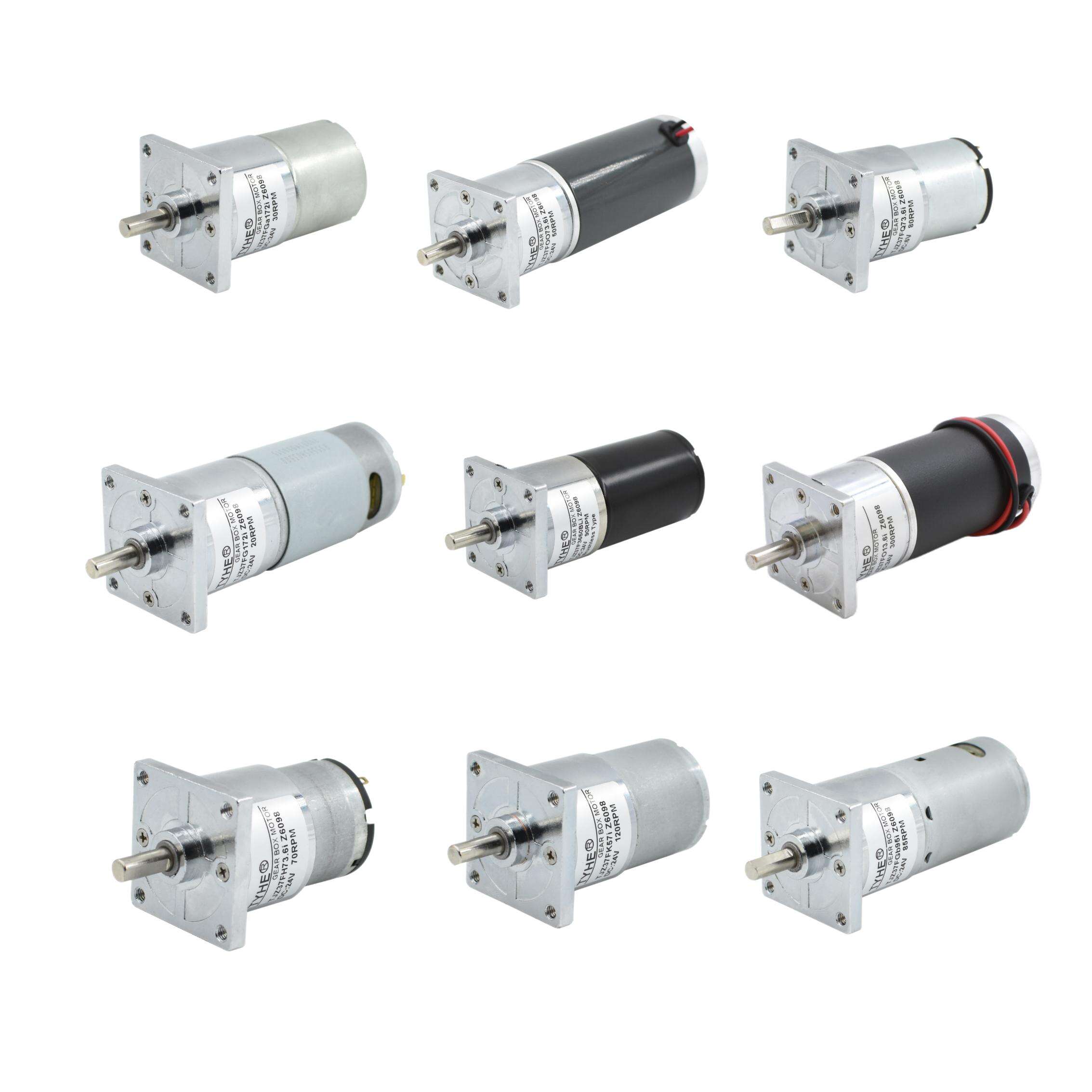
Understanding the fundamental differences between a dc gear motor and a standard motor is crucial for engineers and manufacturers selecting the right power solution for their applications. While both motors convert electrical energy into mechanical motion, their internal mechanisms, performance characteristics, and practical applications differ significantly in ways that impact project outcomes and operational efficiency.
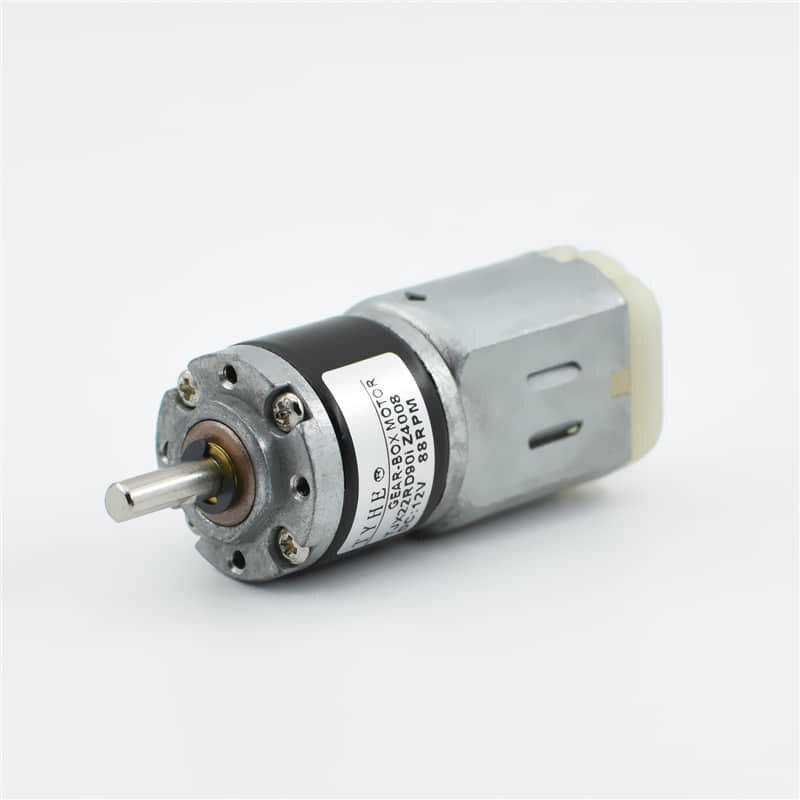
The core distinction lies in the integrated gear reduction system that defines a dc gear motor. Standard DC motors deliver high-speed, low-torque output directly from the motor shaft, while a dc gear motor incorporates internal gear trains that trade speed for significantly increased torque output. This mechanical advantage fundamentally changes how these motors perform in real-world applications, affecting everything from precision control to power consumption patterns.
Mechanical Design Architecture Differences
Internal Gear Train Integration
The most obvious difference between a dc gear motor and standard motor lies in the integrated gear reduction system. A dc gear motor houses a complete gear train assembly within its casing, typically featuring planetary, spur, or worm gear configurations. These gears are precisely engineered to reduce the motor's natural high-speed output while multiplying torque proportionally. Standard DC motors, conversely, deliver power directly from the rotor shaft without any internal speed modification mechanisms.
This gear integration affects the overall motor dimensions and weight distribution. A dc gear motor typically exhibits a longer profile due to the additional gear housing section, while maintaining similar diameter specifications to comparable standard motors. The gear assembly also introduces additional bearing systems and lubrication requirements that standard motors do not possess, influencing maintenance schedules and operational considerations.
Shaft Output Configuration
Standard DC motors feature direct-drive shaft configurations where the output shaft connects directly to the rotor assembly. This design delivers the motor's natural speed and torque characteristics without modification. The dc gear motor configuration places the output shaft at the end of the gear train, fundamentally altering the power delivery characteristics through mechanical reduction ratios.
The shaft output positioning also differs between these motor types. Standard motors may offer dual-shaft options or various shaft lengths, while a dc gear motor typically provides a single output shaft positioned at the gear housing end. This affects mounting considerations and mechanical integration requirements in different applications.
Performance Characteristics Analysis
Speed and Torque Relationships
The fundamental performance difference between a dc gear motor and standard motor centers on their speed-torque delivery profiles. Standard DC motors naturally operate at high speeds, typically ranging from 3,000 to 15,000 RPM depending on voltage and design specifications. These motors deliver relatively low starting torque but can maintain consistent speed under varying load conditions.
A dc gear motor transforms this high-speed, low-torque output into high-torque, low-speed characteristics through gear reduction. Common reduction ratios range from 3:1 to 1000:1, meaning a motor naturally spinning at 3,000 RPM could deliver 300 RPM through a 10:1 reduction while increasing available torque by the same factor. This mechanical advantage makes a dc gear motor suitable for applications requiring substantial force delivery at controlled speeds.
Precision Control Capabilities
Control precision represents another significant difference between these motor types. Standard DC motors respond quickly to electrical input changes due to their direct-drive configuration and lower rotational inertia. However, achieving precise low-speed control requires sophisticated electronic speed control systems that can be complex and expensive.
The dc gear motor inherently provides mechanical speed reduction that simplifies precise control at lower speeds. The gear train acts as a mechanical filter, smoothing out minor electrical fluctuations and providing more stable low-speed operation. This characteristic makes gear motors particularly valuable in positioning applications, robotics, and automated machinery where precise movement control is essential.
Application Suitability Factors
Load Handling Capabilities
Load handling requirements often determine whether a dc gear motor or standard motor is more appropriate for specific applications. Standard DC motors excel in applications requiring high-speed operation with relatively light loads, such as fans, pumps, or spindle drives. Their direct-drive configuration minimizes mechanical losses and provides efficient power transfer at high speeds.
Heavy-duty applications typically favor a dc gear motor due to its superior torque multiplication capabilities. The gear reduction system allows smaller motors to handle substantial loads that would require much larger standard motors. This size and weight advantage becomes particularly important in portable equipment, robotic applications, and space-constrained installations where power density is critical.
Starting and Stopping Characteristics
Starting behavior differs significantly between these motor configurations. Standard DC motors can accelerate quickly to operating speed due to their low rotational inertia, but may struggle to start under heavy loads without additional starting circuits. The high starting current requirements can stress electrical systems and require robust power supply designs.
A dc gear motor demonstrates superior starting torque characteristics due to gear multiplication effects. The increased mechanical advantage allows these motors to overcome significant static friction and load resistance during startup. However, the additional rotational mass of the gear train creates higher inertia, resulting in slower acceleration and deceleration times compared to standard motors.
Efficiency and Operational Considerations
Energy Efficiency Profiles
Energy efficiency comparisons between a dc gear motor and standard motor depend heavily on application requirements and operating conditions. Standard DC motors achieve peak efficiency when operating near their designed speed and load specifications. Direct-drive operation eliminates gear losses, potentially providing efficiency ratings of 85-95% under optimal conditions.
The gear train in a dc gear motor introduces mechanical losses that reduce overall system efficiency. Typical gear efficiency ranges from 70-90% per stage, meaning multi-stage reductions can significantly impact overall efficiency. However, the ability to operate at optimal speed-torque combinations often compensates for these losses in practical applications, especially when the alternative would require electronic speed control systems.
Maintenance and Reliability Factors
Maintenance requirements differ substantially between these motor types due to their mechanical complexity differences. Standard DC motors require minimal maintenance beyond periodic brush replacement in brushed models and bearing lubrication. Their simple construction results in fewer failure points and longer maintenance intervals.
A dc gear motor introduces additional maintenance considerations related to the gear train assembly. Gear lubrication, wear monitoring, and potential gear replacement represent additional maintenance tasks not required with standard motors. However, modern gear motors often feature sealed, permanently lubricated gear assemblies that minimize maintenance requirements while providing reliable long-term operation.
FAQ
Can a standard DC motor be converted to function like a dc gear motor?
While you cannot internally convert a standard DC motor into a dc gear motor, you can achieve similar functionality by adding external gear reduction systems. External gearboxes, belt drives, or chain drives can provide speed reduction and torque multiplication. However, these external solutions typically occupy more space, require additional mounting hardware, and may introduce alignment challenges compared to integrated dc gear motor designs.
Which motor type offers better speed control accuracy?
A dc gear motor generally provides better speed control accuracy at low speeds due to its mechanical gear reduction that acts as a natural filter for electrical fluctuations. Standard DC motors can achieve excellent speed control but typically require more sophisticated electronic control systems, especially for precise low-speed applications. The choice depends on your specific speed range requirements and control system complexity preferences.
How do cost considerations differ between dc gear motors and standard motors?
Standard DC motors typically have lower initial purchase costs due to their simpler construction. However, a dc gear motor may offer better overall value when considering the total system cost, including external speed reduction components, control systems, and mounting hardware that might be required with standard motors. The integrated design of gear motors often reduces installation complexity and total system costs.
What determines the appropriate gear ratio selection for a dc gear motor?
Gear ratio selection depends on your application's speed and torque requirements. Calculate the desired output speed by dividing the motor's base speed by your target speed. Similarly, determine required torque multiplication by comparing load torque requirements to the motor's natural torque output. Consider that higher gear ratios provide more torque but reduce speed and efficiency, while lower ratios maintain higher speeds with less torque multiplication.
