 EN

Automotive Micro Motors: Power Seat, Power Tailgate and Folding Mirror Actuation
"Ten Thousand Cycles · −40 °C to +85 °C · Cabin-Quiet" — Worm gear and planetary actuation for vehicle comfort and convenience functions
Motor types: DC brushed motor + worm gear actuator (self-locking) / DC planetary gear motor / micro DC gear motor for mirror and screen mechanisms
Application case
A mid-range passenger vehicle now contains dozens of micro motors, and the fastest-growing share of them sits in comfort and convenience functions rather than powertrain:
Function |
Drive configuration |
Critical requirement |
Power seat adjustment (4/6/8-way) |
Worm gear actuator per axis |
Self-locking hold, high cycle life, crash-load integrity |
Seat memory & lumbar |
Micro DC gear motor |
Compact envelope, quiet operation, precise stop |
Power tailgate / liftgate |
Twin worm gear actuator or spindle drive |
Synchronized lift, overload protection, low-temperature start |
Folding door mirror |
Micro DC gear motor |
Compact, sealed against weather, soft end-stop |
In-cabin screen rotation |
Planetary gear motor |
Low backlash, precise positioning, silent cabin operation |
Vent and flap control |
Micro gear motor / stepper |
Repeatable positioning, wide temperature range |
Motorized footboard / running board |
High-torque brushless or worm gear drive |
Load capacity, corrosion resistance |
The automotive actuator market was estimated at USD 27.9 billion in 2024 and is projected to reach USD 33.5 billion by 2030 (MarketsandMarkets). Power tailgate systems are the fastest-moving segment, forecast to grow from USD 3.7 billion in 2026 to USD 8.4 billion by 2036 at an 8.5% CAGR (Fact.MR); the automotive micromotor segment itself is estimated at USD 16.23 billion in 2025, rising to USD 17.07 billion in 2026 (Mordor Intelligence).
Industry pain points
1. Cycle life beats peak torque. Seat and mirror mechanisms run thousands of cycles per vehicle life; tailgate actuators see heavy daily use. Gear tooth wear, brush wear and grease migration — not winding failure — determine warranty cost.
2. Temperature extremes. Cabin and underbody components face −40 °C cold starts and +85 °C soak. Grease viscosity, magnet performance and plastic gear dimensional stability all shift across that range; the motor must be specified at both ends, not at 25 °C.
3. Cabin noise is judged subjectively. Interior mechanisms are heard from 30 cm away in a quiet cabin. Gear mesh tone and end-of-travel impact are the usual complaints; worm stages plus soft-stop control are the standard answer.
4. Self-locking for safety and hold. Seat tracks and tailgates must not drift under load with power off. A self-locking worm stage holds mechanically at zero current — a decisive advantage over efficient but back-drivable planetary stages.
5. Sealing and corrosion. Mirror and underbody motors face rain, road salt and car washes. Specify the IP code per IEC 60529 and the corrosion resistance requirement explicitly.
6. Quality-system fit. Interior comfort and convenience programs are commonly specified to industrial quality systems such as ISO 9001 with customer-specific validation (PPAP-style documentation, capability data). Powertrain and safety-critical functions typically require IATF 16949. State which regime your program follows before quoting, so the supplier's documentation matches the requirement.
TYHE solution
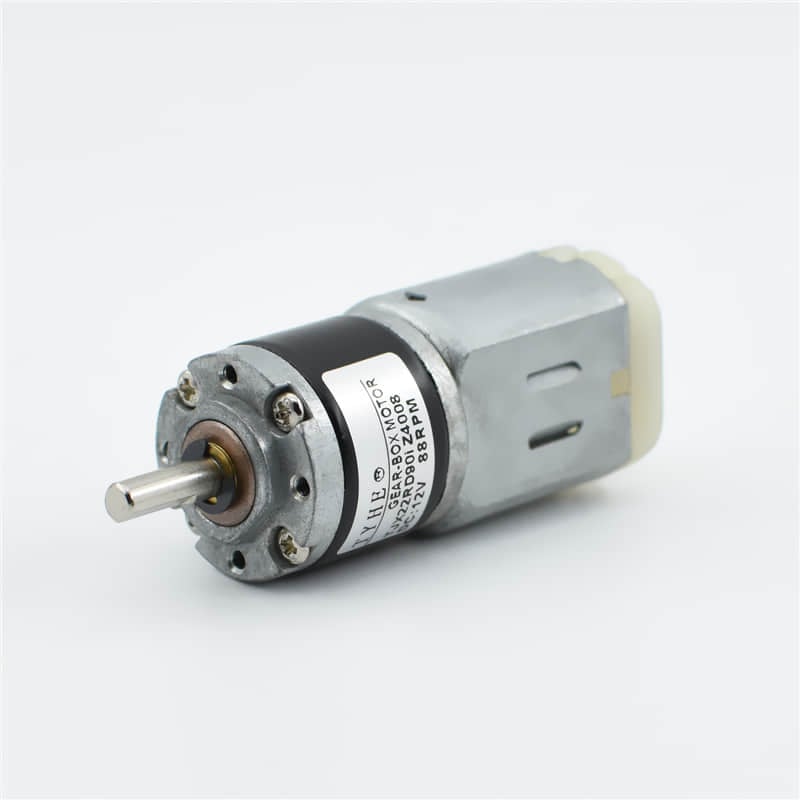
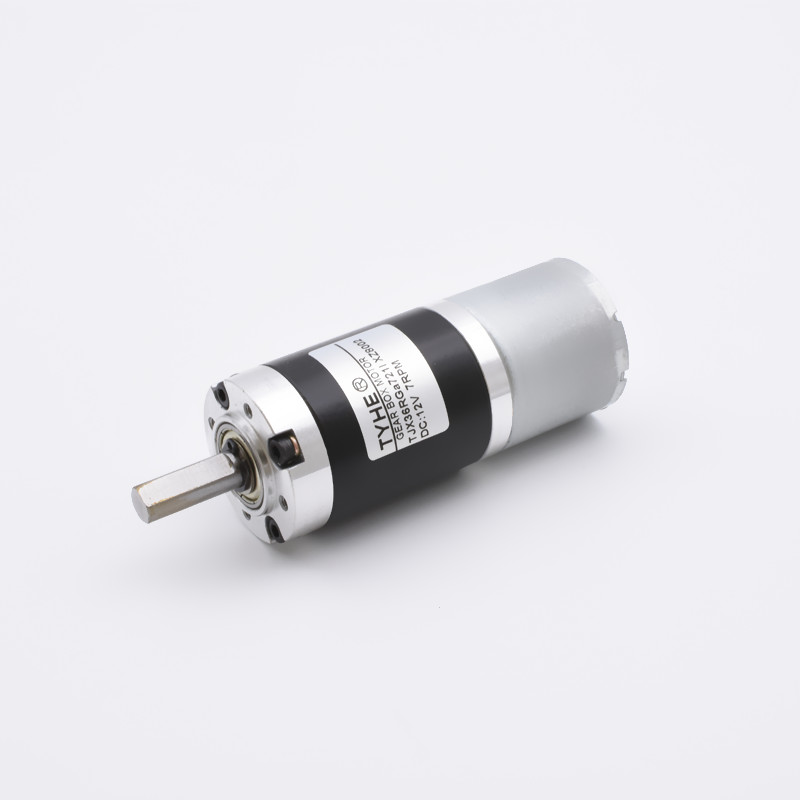
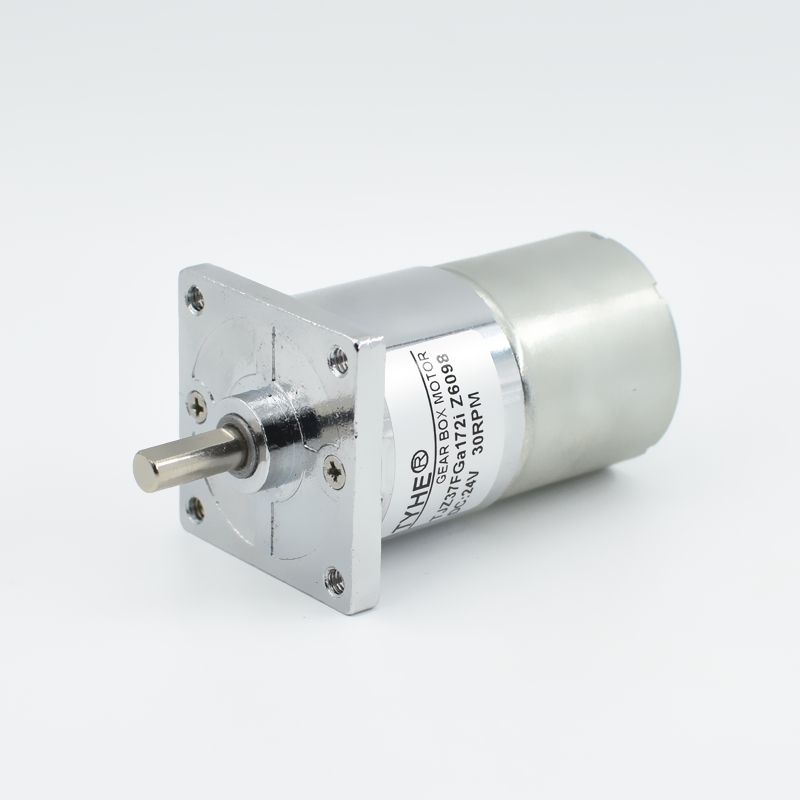
TYHE Motor produces micro DC motors, planetary gear motors, worm gear motors and stepper motors — around 200 motor types and 2,000+ SKUs, diameters from roughly 16 mm to 106 mm, CE and RoHS certified under an ISO 9001-based quality management system, exporting to 35+ countries. Its existing automotive application pages already cover motorized footboards, in-cabin screen rotation and stepper-driven brake-system actuation.
For automotive comfort programs:
Self-locking worm gear actuators
- for seat axes and tailgate lift, specified against static load, dynamic load and cycle-life targets with a stated safety factor.
Planetary gear motors
- for screen rotation and precision positioning where low backlash matters more than self-locking.
Temperature-qualified specification:
- grease grade, magnet grade and gear material selected for the customer's temperature window rather than room-temperature datasheet values.
Documented testing:
- life testing in cycles and hours at the real duty cycle, noise in dB(A) at a stated distance, and performance curves at the working point.
Program execution:
- design-to-mass-production in under 40 days, dedicated sample line, four assembly lines and 100+ production staff for ramp, 24-hour after-sales response, and R&D cost refunded after mass production.
Data to prepare before the RFQ
1. Load per axis: static hold load, dynamic drive load, peak jam load
2. Cycle life target (cycles) and duty profile
3. Temperature window for operation and for storage
4. Noise target with measurement distance and cabin background stated
5. Voltage (12 V / 24 V), current limit, control interface, end-stop method
6. Environmental exposure: IP code, salt spray or corrosion requirement
7. Quality documentation required: PPAP level, capability data, material declarations
FAQ
Why are worm gear motors used in power seats?Because they self-lock: the seat holds position under occupant load with no holding current, and the mechanism cannot be back-driven during a crash event by the seat's own inertia.
How many motors does a power seat use?Four to eight for a 4-way to 8-way seat, plus additional motors for lumbar, memory, headrest and massage functions.
What voltage do automotive micro motors run at?12 V nominal for passenger vehicles and 24 V for commercial vehicles, with transients well above nominal during load dump — specify the transient requirement in the drawing.
Are these motors suitable for safety-critical functions?That depends on the program's quality regime. Safety-critical applications generally require IATF 16949 systems and functional-safety validation; comfort and convenience functions are commonly run on ISO 9001-based systems with customer-specific validation.
How is low-temperature start-up verified?By running the mechanism at the cold end of the specified temperature range after soak, measuring start-up current and confirming motion within the required time.
Can one supplier cover seat, mirror, tailgate and screen mechanisms?Yes. Sourcing all cabin actuation from one factory keeps connector, noise and quality standards consistent across the vehicle.
Bottom line
Automotive comfort actuation is a life-and-environment specification, not a torque specification. Define cycle count, temperature window, self-locking requirement, IP code and noise method up front, and choose a supplier whose documentation matches your quality regime.
Contact TYHE Motor for automotive actuation solutions: https://www.tyhemotors.com/contact-us